Leased Ad Space
How much do you need to make an hour to bring home $1000 a week?
Published by Barry McKinney — 10-28-2026 12:10:36 PM
How much do you need to make an hour to bring home $1000 a week? The honest math: with a standard 40-hour workweek and typical US taxes plus deductions, you need to earn roughly $28 to $32 per hour gross to take home $1,000 net. If you work fewer hours, freelanced, or are self-employed, the number changes — but the core principle does not. $1,000 net per week is roughly $52,000 gross per year, and getting there with an hourly wage is harder than most people realize.
This is one of the most practical questions in personal finance, because it forces you to think about the difference between gross and net — the money you actually see in your bank account versus the number on your offer letter. Most people discover the gap the hard way: they take a $25/hour job expecting $1,000 a week and end up with $790 after taxes, Social Security, and healthcare deductions.
I have worked both hourly jobs and self-employed income streams, and I can tell you the honest truth: an hourly wage is a great way to earn $1,000 a week if you want a steady paycheck. But it is a terrible way to grow beyond it. This article breaks down the exact math — gross vs. net, state by state, hourly vs. salaried — and then shows you a path where $1,000 a week does not require trading 40 hours for it.
Key Takeaways
- To net $1,000/week at 40 hours, you need roughly $28–$32/hour gross, depending on state and deductions.
- To net $1,000/week at 30 hours, you need roughly $40–$45/hour gross.
- To net $1,000/week at 20 hours, you need roughly $60–$67/hour gross.
- Self-employed workers need more — around $35–$40/hour — because they pay both halves of FICA.
- Affiliate marketing can produce $1,000/week without an hourly rate at all, because income is not tied to hours.
How much do you need to make an hour to bring home $1000 a week? The gross-to-net math
Before I give you a number, let's be clear about what "bring home" actually means. "Bring home" means net pay — the money that lands in your bank account after all deductions. Your gross pay — the number in your job offer — is a much bigger number, and the gap between the two is the entire point of this article.
Here is how $1,000 net per week breaks down at standard US deduction rates (federal + state + FICA + typical benefits):
- Federal income tax: roughly 10–12% at this income level.
- FICA (Social Security + Medicare): 7.65% (for W-2 employees).
- State income tax: 0% in states like Texas, Florida, and Nevada; up to 9% in states like California.
- Health insurance and 401(k): varies widely, typically 5–15% of gross.
Add it up: in a moderate-tax state with average benefits, roughly 20–25% of your gross pay is gone before you see it. That is why a $25/hour job that "sounds like $1,000 a week" actually brings home about $790–$820.
The formula: Gross hourly rate = (Net target ÷ Hours worked) ÷ (1 − Total deduction percentage). For $1,000 net at 40 hours with 22% deductions, that is $1,000 ÷ 40 ÷ 0.78 = $32.05 per hour. That is the honest number.
What hourly rate do you actually need by state?
Here is the exact math, state by state, for a 40-hour workweek with $1,000 net per week:
| State | State income tax | Approx. total deductions | Hourly rate needed |
|---|---|---|---|
| Texas / Florida / Nevada | 0% | ~17% | $30.12/hr |
| Washington / Tennessee | 0% | ~18% | $30.49/hr |
| Colorado / Arizona | ~4% | ~21% | $31.65/hr |
| Virginia / Georgia | ~5% | ~22% | $32.05/hr |
| New York | ~6.5% | ~24% | $32.89/hr |
| California | ~9% | ~26% | $33.78/hr |
| Oregon / Minnesota | ~9% | ~26% | $33.78/hr |
So the answer to "how much do you need to make an hour to bring home $1000 a week" is: $30 to $34 per hour for a standard W-2 job in the US, depending on your state. That is $62,400 to $70,720 per year. Higher than most people expect, and that is the point.
How does the number change with fewer hours?
Here is where it gets interesting. The fewer hours you work, the higher your hourly rate needs to be. This is the math that stops most people from negotiating for a four-day workweek or a part-time schedule — even at a "high" hourly rate, it does not produce the same net income.
| Weekly hours | Hourly rate needed for $1,000 net | Annual gross (52 weeks) |
|---|---|---|
| 40 hours | ~$32/hr | ~$66,560 |
| 35 hours | ~$36.50/hr | ~$66,430 |
| 30 hours | ~$42.70/hr | ~$66,612 |
| 25 hours | ~$51.30/hr | ~$66,690 |
| 20 hours | ~$64/hr | ~$66,560 |
| 10 hours | ~$128/hr | ~$66,560 |
Look at the annual gross column. It stays roughly the same — about $66,500 — no matter how many hours you work. That is because $1,000 a week net is $52,000 a year net, which is $66,500 gross regardless of hours. The hourly rate just reflects how concentrated that income is.
The critical insight: $1,000 a week net is a fixed dollar goal, not an hourly rate goal. If you can reach it in 20 hours, you have more time. If you can reach it in 10 hours, you have much more time. That is the entire argument for building income that is not tied to hours.
What about self-employed and freelance hourly rates?
Self-employed and freelance workers need a significantly higher hourly rate to net the same $1,000 per week, because they pay both halves of FICA (15.3% instead of 7.65%), do not get employer health insurance contributions, and do not have paid time off. Here is the honest math:
- W-2 employee: ~$32/hour for $1,000 net at 40 hours.
- Self-employed (freelance/consultant): ~$38–$42/hour for $1,000 net at 40 hours.
- Self-employed at 30 hours: ~$51–$56/hour for $1,000 net.
- Self-employed at 20 hours: ~$76–$84/hour for $1,000 net.
This is why freelancers charge $50+ per hour even when they "only" want to make $1,000 a week. They are not being greedy — they are paying for their own benefits, taxes, and non-billable hours. If you are considering freelancing as a path to $1,000 a week, this math matters.
Why is affiliate marketing the smarter path to $1,000 a week?
According to industry data, the majority of consistent affiliate marketers who build for 6–12 months earn $1,000 to $4,000 per month — and some earn far more. The reason is simple: affiliate marketing does not require an hourly rate at all. You are not paid for hours worked. You are paid for results — referrals, sales, commissions — and those results can accumulate without additional hours.
Here is why affiliate marketing beats the hourly-rate math:
- No hourly cap. Your income is not limited by hours worked.
- Recurring commissions. Subscription products pay you every month a customer stays subscribed.
- Compounding. Each referral, subscriber, and piece of content keeps paying over time.
- No deductions. Your commissions are not subject to employer payroll deductions.
- Zero startup cost. You can start with $0 and a phone.
The critical insight: the question "how much do I need to make an hour" assumes you are being paid by the hour. Affiliate marketing breaks that assumption. You are paid for results, and results do not care how many hours you worked to produce them. That is why $1,000 a week is achievable — often with far fewer than 40 hours of ongoing work — without needing a $32/hour pay rate.
What are the 3 best tools to reach $1,000 a week without an hourly rate?
I have tested dozens of platforms. These three are the ones I would build with if I had to reach $1,000 a week starting from zero today. Each plays a different role in the system.
1. List Elevate — build $1,000 a week without an hourly rate
List Elevate is the highest-leverage system I have used for a $1,000-a-week goal. You join, grab your personal link, and start posting. Then the platform builds your email list for you through a viral referral structure. Every lead your referrals generate lands on your list, and the whole system runs from a phone.
The compensation is aggressive by design. You earn 200% commissions on direct referrals during the launch period, then 25% residual commissions for life across your downline, plus a 25% matching bonus on what your referrals earn. A referral earning $10,000 generates a $2,500 matching check for you — with no cap on how many referrals you can earn from.

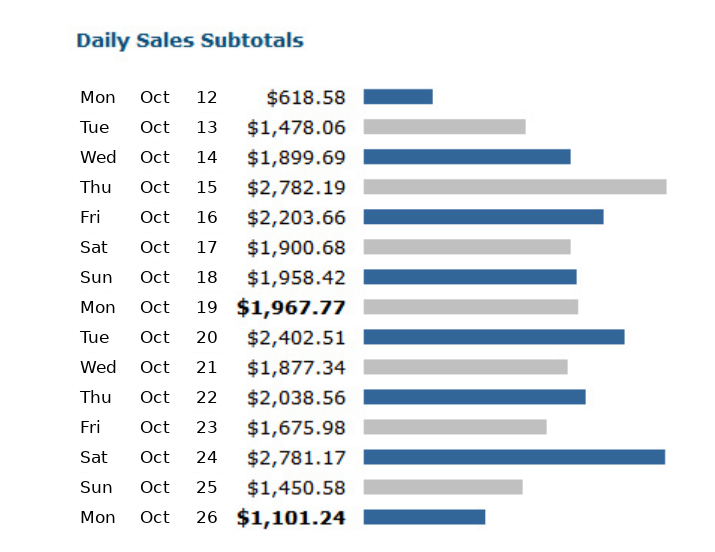
Here is why this bypasses the hourly math entirely: you are not being paid per hour. You are being paid per result. About 15–20 active referrals on the 200% plan can produce $1,000 a week within 6–12 months of consistent building — without you ever needing a $32/hour wage. Here is real proof from marketers running the system:
The platform includes an Email Marketing Mastery course valued at $500, so you learn the skill as you build. You get a drag-and-drop editor, 600,000 emails per hour sending speed, and 99% inbox deliverability — all manageable from a phone. If you want the shortest route to $1,000 a week, claim the List Elevate launch offer and the $500 bonus before the window closes.
2. GotBackup — recurring 25% that builds the $1,000-a-week floor
Cloud backup is unglamorous — and that is exactly why it pays. People pay for it month after month because their files are on the line. GotBackup pays 200% of the first month's subscription and 25% recurring on every month a customer stays active.
Retention is the whole game. Nobody cancels a service that protects their photos and documents. Your commission keeps arriving long after the sale. Stack 200 active referrals at $20 a month and you are looking at roughly $1,000 a month in passive income — half of your $1,000-a-week target — from a single product. Stack 400 and you are at the full $1,000-a-week floor. There is a team component too, so you can earn on your referrals' referrals.
3. LockMyPosition — lock in traffic, lock in the income
LockMyPosition fixes the problem every affiliate marketer eventually hits: your content does not rank, so nobody sees your links. This tool helps you lock in search positions and hold them, which feeds directly into your commissions.
If you are building a long-term income asset — a blog, a landing page, a review site — this is the piece most people skip and then wonder why their earnings stay flat. Ranking is the difference between "I posted a link" and "I get traffic every day without touching it." For a $1,000-a-week goal, ranking is what turns a one-time viral moment into a floor that pays every week.
What is the honest roadmap to $1,000 a week without an hourly wage?
Here is the exact sequence I would follow to reach $1,000 a week without the hourly trade:
- Week 1: Set the foundation. Join List Elevate, grab your link, and post your first honest recommendation.
- Week 2: Pick one traffic source. Pinterest, TikTok, Instagram Reels, YouTube Shorts, or a blog. One, not five.
- Weeks 3–4: Build the list. Every post should point to a list opt-in. The list is the asset.
- Weeks 5–8: Layer in recurring income. Add GotBackup so you are earning both one-time and monthly commissions.
- Weeks 9–12: Lock your rankings. Use LockMyPosition to protect the traffic that is working.
- Months 4–6: Scale what works. Double down on the format that produces the most clicks.
- Months 7–12: Compound toward $1,000 a week. By this point your list should be large enough that recurring commissions plus new sales produce the target.
Notice what is not on this list: applying for jobs, negotiating hourly rates, or calculating taxes. That is the point. Affiliate marketing bypasses the entire gross-to-net math you would need for a wage job. Your $1,000 a week is closer to net than gross, because there are no payroll deductions to subtract.
How long does it really take to earn $1,000 a week without an hourly rate?
Honest answer: 6 to 12 months for most consistent beginners using affiliate marketing. Freelancing with a strong hourly rate can reach $1,000 a week faster (often 2–8 weeks if you have a marketable skill) but requires charging $40–$50 per hour for self-employed work. Selling items or rideshare can produce $1,000 in a week but not repeatably.
The people who succeed understand that the hourly question is the wrong question for long-term income. They build toward $1,000 a week through systems, not through wages — and by doing so, they skip the gross-to-net math entirely.
What mistakes stop people from reaching $1,000 a week?
- Only calculating hourly rates. $1,000 net requires a higher hourly than most people realize.
- Forgetting about deductions. A $25/hour job does not bring home $1,000 a week — it brings home $790–$820.
- Falling for "instant $1,000" apps. They are almost always scams.
- Skipping the list. Traffic dies; the list survives and compounds.
- Quitting in week three. Most beginners stop just before results appear.
- Believing the timeline. $1,000 a week in 6–12 months is realistic. $1,000 tomorrow is not.
FAQ
How much do you need to make an hour to bring home $1,000 a week?
At 40 hours with standard US taxes and benefits, you need roughly $30–$34 per hour gross to net $1,000. That is $62,400 to $70,720 annually.
Is $1,000 a week take-home good?
Yes — $1,000 net per week is about $52,000 take-home per year, which is a solid middle-class income in most of the US. Gross equivalents reach $62,000–$70,000.
How much is $1,000 a week after taxes?
Approximately $1,000 net requires roughly $1,280–$1,350 gross per week, depending on your state and benefits. That is about $66,500–$70,200 per year.
What hourly rate do I need for $1,000 a week self-employed?
As a self-employed worker, expect to need $38–$42 per hour for $1,000 net at 40 hours — because you pay both halves of FICA and cover your own benefits.
Can I reach $1,000 a week without an hourly wage?
Yes. Affiliate marketing pays you for results, not hours. Consistent affiliate marketers reach $1,000 a week within 6–12 months of building.
What's the fastest way to make $1,000 a week?
Freelancing with a strong skill can produce $1,000 a week in 2–8 weeks. Affiliate marketing takes 6–12 months but does not require trading hours for money.
Can I do this entirely from my phone?
Affiliate marketing: yes. Freelancing: mostly, depending on the skill. Every tool in this guide works on mobile.
Conclusion
So, how much do you need to make an hour to bring home $1000 a week? The honest answer is roughly $30–$34 per hour gross if you are a W-2 employee working 40 hours, or $38–$42 per hour if you are self-employed. That is the math. But the smarter question is: do you want to trade 40 hours a week for $1,000, or do you want to build something that pays you $1,000 without the hourly trade? Affiliate marketing is the answer to the second question, and it is the easiest method to make money from home with a real ceiling. Start with List Elevate for the viral list, add GotBackup for recurring monthly income, and use LockMyPosition to lock in the traffic that makes it all work. $1,000 a week is a math problem — or a system. The system is better.
Earnings Disclaimer
Results are not guaranteed. This article describes methods and tools, not promises of income. Individual outcomes depend on your own effort, market conditions, and personal circumstances. Nothing on this page should be read as a guarantee of any specific earnings. Treat every income figure as an illustration, not a certainty.
Affiliate Disclaimer
This article contains affiliate links. If you purchase through one of them, the author may earn a commission at no additional cost to you. This does not influence the recommendations — the tools listed are ones the author genuinely uses and believes in. Always do your own research before joining any program.
About Barry McKinney

Hi, my name is Barry. I have over 25 years of experience in affiliate marketing and a strong interest in network marketing and MLM. I quit my job 25 years ago and built a business that now generates a consistent five-figure monthly passive income – all from the comfort of my own home. I’m passionate about online business, financial freedom, and helping others discover the opportunities that network marketing can offer.