Leased Ad Space
Is affiliate marketing the same as multi-level marketing?
Published by Barry McKinney — 10-28-2026 02:10:39 PM
Is affiliate marketing the same as multi-level marketing? No — they are fundamentally different business models. Affiliate marketing pays you a commission for referring customers who buy products. MLM (multi-level marketing) pays you for recruiting distributors who then recruit more distributors, with commissions flowing up a hierarchy. Affiliate marketing does not require recruitment, does not require inventory, and does not depend on a downline to earn.
This is one of the most important distinctions in the online income space, and it is also one of the most misunderstood. The confusion is understandable: both models pay commissions, both use referral links, and some MLM companies market themselves as "affiliate programs" to sound more legitimate. But the structural difference between the two is enormous, and it determines everything about how much money you can realistically make, how sustainable the income is, and whether the model has a legal or ethical risk.
I have participated in both. I have been an affiliate for products I genuinely used, and I have been pitched by MLMs that promised to change my life. The affiliate income is still paying me years later. The MLM did not survive month three. This article breaks down the difference honestly — what each model really is, how they pay, what they require, and why one of them is worth your time while the other is usually not.
Key Takeaways
- Affiliate marketing pays you for referring customers. MLM pays you for recruiting distributors.
- Affiliate marketing does not require recruitment. MLM income usually depends on building a downline.
- Affiliate marketing has no inventory, no fees, and no required purchases. MLM often involves all three.
- Affiliate marketing is the easier, safer model for a beginner. My recommended tools: List Elevate, GotBackup, and LockMyPosition.
- Some MLMs are legal, but the model caps most participants at a loss. Affiliate marketing does not.
Is affiliate marketing the same as multi-level marketing? The honest comparison
Before we compare, let's define both clearly. The confusion happens because both models involve recommending products and earning commissions. But the payment structure, the requirements, and the ceiling are very different.
Affiliate marketing is a referral model. A company (the merchant) has a product. You (the affiliate) promote that product through a unique tracking link. When someone clicks your link and buys, you earn a commission. That is the entire model. You do not have to recruit anyone. You do not have to buy inventory. You do not have to pay to join.
Multi-level marketing (MLM) is a recruitment model. You join a company as a distributor. You earn commissions on your own sales, but the bigger income opportunity is recruiting other distributors — who then recruit more distributors — and earning a percentage of their sales. The payment structure is typically called a "downline" or "upline," and it looks like a pyramid of distributors.
The critical difference: in affiliate marketing, you are paid for products sold. In MLM, you are paid primarily for people recruited. That is the structural distinction that determines everything else — including whether the business is legal, ethical, and sustainable.
What are the key differences between affiliate marketing and MLM?
Here is the honest side-by-side comparison:
| Feature | Affiliate Marketing | Multi-Level Marketing (MLM) |
|---|---|---|
| Payment source | Commissions on product sales | Commissions on sales + recruitment bonuses |
| Recruitment required? | No | Usually yes — the bigger income comes from downline |
| Inventory required? | No | Often yes (starter kits, monthly minimums) |
| Upfront cost | $0–$50 | $50–$1,000+ (starter kits, required purchases) |
| Downline required to earn? | No | Usually yes |
| Typical income ceiling | Unlimited (top affiliates earn millions) | Capped for most — top 1% earn most of the money |
| Legal status | Always legal | Legal in most countries, but often operates in gray zones |
| Beginner-friendly | Yes | Rarely — most participants lose money |
Look at the "recruitment required" row. That is the defining difference. Affiliate marketing is a referral business. MLM is a recruitment business that happens to sell products. When someone says "MLM is legal as long as it sells products," they are describing a technical legal defense, not a business model that actually pays most of its participants.
There is one important nuance: some legitimate companies operate hybrid models that include both affiliate and downline components. GotBackup, one of the tools I recommend, pays a base commission plus a small team bonus. That is not the same as an MLM — it is a bonus structure layered onto a product business — but it is worth acknowledging so you understand the spectrum. The key difference is whether the bonus structure is optional or whether your income depends on recruitment. For GotBackup, it is optional. For a true MLM, it is usually mandatory to earn meaningfully.
Why is affiliate marketing the better model for a beginner?
According to industry data, the majority of MLM participants — over 99% — lose money, according to studies from the FTC and independent researchers. That is not because MLM participants are lazy or stupid. It is because the model is structurally designed to reward the top of a pyramid, and the bottom of the pyramid always has more people.
Affiliate marketing works differently. There is no pyramid. You are paid for the products you sell. You do not need a downline. You do not need to recruit anyone. You do not need to buy inventory. You do not need to attend monthly meetings or buy starter kits. You just recommend products and earn commissions on the sales.
Here is why that matters:
- No upfront cost. You can start affiliate marketing with $0. MLMs usually require a starter kit or minimum purchase.
- No recruitment pressure. You do not have to sell your friends and family on a business opportunity.
- No inventory risk. You are not buying stock that might not sell.
- No income cap from a downline. Your income grows with your content and referrals, not with how many people you can recruit.
- Real recurring commissions. Subscription products pay you monthly for as long as the customer stays subscribed.
The critical insight: affiliate marketing is a product business. MLM is a recruitment business. If you want to be paid for selling things people want, affiliate marketing is the model. If you want to be paid for building a team, MLM is the model — but recognize that the math favors the people who got there first.
What are the 3 best tools for legit affiliate marketing?
I have tested dozens of programs. These three are the ones I would build with if I had to start from zero today — and unlike most MLMs, none of them require recruitment, inventory, or a starter kit.
1. List Elevate — the most scalable affiliate system for beginners
List Elevate is the highest-leverage affiliate system I have used. You join, grab your personal link, and start posting. Then the platform builds your email list for you through a viral referral structure. Every lead your referrals generate lands on your list, and the whole system runs from a phone.
The compensation is aggressive by design. You earn 200% commissions on direct referrals during the launch period, then 25% residual commissions for life across your downline, plus a 25% matching bonus on what your referrals earn. A referral earning $10,000 generates a $2,500 matching check for you — with no cap on how many referrals you can earn from.

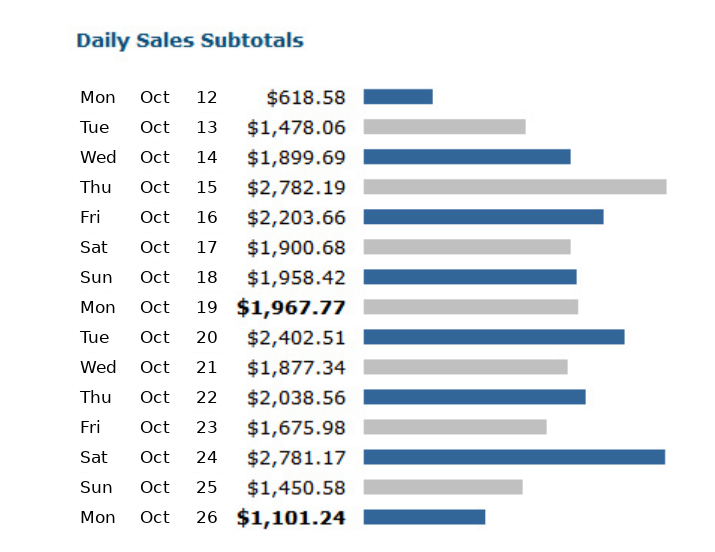
Here is the honest distinction from MLM: List Elevate pays you for sales, not for recruiting. You are not required to build a downline to earn. You are not required to buy inventory. You are not required to attend meetings. The 25% matching bonus is a reward for teaching others — not a requirement to earn. Here is real proof from marketers running the system:
The platform includes an Email Marketing Mastery course valued at $500, so you learn the skill as you build. You get a drag-and-drop editor, 600,000 emails per hour sending speed, and 99% inbox deliverability — all manageable from a phone. If you want the shortest route to real affiliate income, claim the List Elevate launch offer and the $500 bonus before the window closes.
2. GotBackup — recurring 25% on a real product
Cloud backup is unglamorous — and that is exactly why it pays. People pay for it month after month because their files are on the line. GotBackup pays 200% of the first month's subscription and 25% recurring on every month a customer stays active.
Retention is the whole game. Nobody cancels a service that protects their photos and documents. Your commission keeps arriving long after the sale. Stack 100 active referrals at $20 a month and you are looking at roughly $500 a month in passive income — from an actual product people need, not from a distributor pyramid. There is a team component too, but it is optional — not required to earn.
3. LockMyPosition — lock in traffic, protect the income
LockMyPosition fixes the problem every affiliate marketer eventually hits: your content does not rank, so nobody sees your links. This tool helps you lock in search positions and hold them, which feeds directly into your commissions.
If you are building a long-term affiliate asset — a blog, a landing page, a review site — this is the piece most people skip and then wonder why their earnings stay flat. Ranking is the difference between "I posted a link" and "I get traffic every day without touching it." That is what turns a side hustle into real affiliate income — without a single recruiter in sight.
How is affiliate marketing structurally different from MLM?
The structural difference is worth understanding in detail, because it explains why one model pays most participants and the other pays only the top.
1. Payment structure
In affiliate marketing, your commission is a percentage of the product's price. A $100 product with a 30% commission pays you $30 per sale. That is the whole math. If you sell ten, you earn $300. If you sell 1,000, you earn $3,000. The math is linear — no downline required.
In MLM, your commission is a percentage of your own sales plus a percentage of your recruits' sales plus a smaller percentage of their recruits' sales, and so on. The percentages decrease as you go down the line, so the bulk of the money flows to the top of the pyramid. That is why the top 1% of MLM participants earn the majority of the revenue.
2. Requirement to earn
In affiliate marketing, you can earn from a single sale. There is no minimum team size, no required purchases, no meetings to attend. In MLM, most compensation plans require you to maintain a minimum personal volume (i.e., buy products every month) and to have a minimum number of active recruits to qualify for team bonuses. If you stop buying or stop recruiting, your income drops.
3. Legal classification
Affiliate marketing is legally classified as advertising or referral marketing. It is unambiguously legal in every country. MLM operates in a legal gray zone in many places — the FTC in the US allows MLM as long as the company does not operate as an illegal pyramid scheme. The legal distinction is whether the income primarily comes from product sales (legal) or from recruitment fees (illegal). Many MLMs argue they are the former, but enforcement actions happen regularly.
4. Long-term sustainability
In affiliate marketing, your income grows with your content, list, and referrals. Those are assets you own. In MLM, your income depends on the people in your downline staying active. If they quit — and most of them will — your income drops. The retention rate of MLM distributors is famously low, often under 20% after the first year.
The critical insight: affiliate marketing builds assets you own. MLM builds a team you do not control. That is the entire difference in one sentence.
How do I start affiliate marketing today?
Here is the exact sequence I would follow starting from zero:
- Pick one affiliate program you genuinely believe in. Start with List Elevate — the commissions and viral list-building make it the fastest route to first dollar.
- Grab your link and post it once with an honest recommendation. One post, done.
- Post one piece of content per day. A post, a short video, a story. One asset every day.
- Choose one traffic source and go deep. Pinterest, TikTok, Instagram Reels, or YouTube Shorts. One, not five.
- Build the list from day one. Traffic is rented. The list is owned.
- Layer in recurring income. Once List Elevate is producing, add GotBackup for monthly commissions on top.
- Lock your rankings. Once you have content, use LockMyPosition to hold the traffic that makes it all work.
Your first real income will land somewhere in weeks four to eight. That is the honest timeline. No recruitment required, no starter kit, no monthly minimums. Just content and consistency.
How long does it take to make affiliate income compared to MLM?
Honest answer: 30 to 90 days for affiliate marketing, and typically never for MLM — most MLM participants never recoup their initial investment. According to the FTC and independent research, over 99% of MLM participants lose money. Affiliate marketing is not a guarantee either, but the failure mode is different: you can fail at affiliate marketing by not working, but you cannot fail at it because someone above you took your share.
The people who succeed at affiliate marketing pick one program, build consistently for 90 days, and let compounding work. The people who fail at MLM usually discover the reality after they have spent hundreds or thousands of dollars on starter kits and required purchases.
What mistakes stop people from succeeding at affiliate marketing?
- Confusing it with MLM. Affiliate marketing does not require recruitment or inventory.
- Paying to join an affiliate program. Legitimate affiliate programs are free to join.
- Buying inventory. If a program asks you to buy stock, it is likely not affiliate marketing.
- Promoting products you do not believe in. Readers notice immediately.
- Ignoring the email list. Traffic dies. The list survives.
- Quitting in week three. Most people stop right before results appear.
FAQ
Is affiliate marketing the same as MLM?
No. Affiliate marketing pays for referring customers who buy products. MLM pays for recruiting distributors who then recruit more distributors. They are fundamentally different models.
Do I have to recruit people in affiliate marketing?
No. Affiliate marketing pays commissions on product sales. Recruitment is not required to earn. Some programs offer referral bonuses, but your base income comes from product sales.
Do I have to buy inventory for affiliate marketing?
No. You do not buy inventory, stock, or starter kits. If a program asks you to buy products, it is not pure affiliate marketing — it may be MLM disguised as affiliate.
Is MLM legal in the US?
Yes, MLM is legal in the US as long as it is not operating as an illegal pyramid scheme. The legal distinction is whether the income primarily comes from product sales or from recruitment fees.
Is affiliate marketing legal?
Yes, unambiguously. Affiliate marketing is legally classified as referral marketing and is legal in every country.
Why do people say affiliate marketing is better than MLM?
Because affiliate marketing has no recruitment requirement, no inventory, no monthly minimums, and no cap from a downline. You are paid for results you produce directly, not for a team you can never fully control.
Can I do affiliate marketing entirely from my phone?
Yes. Every tool in this guide and every traffic source mentioned works from a phone.
Conclusion
So, is affiliate marketing the same as multi-level marketing? No — and the difference matters enormously. Affiliate marketing is a referral business that pays for product sales. MLM is a recruitment business that pays for building a team. Affiliate marketing requires no inventory, no starter kit, and no recruitment. It is the easier, safer, and more sustainable model for a beginner — the easiest method to make money from home with a real ceiling. Start with List Elevate for the viral list, add GotBackup for recurring monthly income, and use LockMyPosition to lock in the traffic that makes it all work. Sell products. Build a list. Skip the pyramid.
Earnings Disclaimer
Results are not guaranteed. This article describes methods and tools, not promises of income. Individual outcomes depend on your own effort, market conditions, and personal circumstances. Nothing on this page should be read as a guarantee of any specific earnings. Treat every income figure as an illustration, not a certainty.
Affiliate Disclaimer
This article contains affiliate links. If you purchase through one of them, the author may earn a commission at no additional cost to you. This does not influence the recommendations — the tools listed are ones the author genuinely uses and believes in. Always do your own research before joining any program.
About Barry McKinney

Hi, my name is Barry. I have over 25 years of experience in affiliate marketing and a strong interest in network marketing and MLM. I quit my job 25 years ago and built a business that now generates a consistent five-figure monthly passive income – all from the comfort of my own home. I’m passionate about online business, financial freedom, and helping others discover the opportunities that network marketing can offer.