Leased Ad Space
What is the most profitable MLM? Measured by company revenue, the top-performing MLMs are Amway ($8.9 billion annually), Natura & Co ($7.5B), Herbalife ($5.2B), Vorwerk ($4.4B), and Coway ($3.0B). But here is the honest part almost no article on this topic will tell you: company profitability and participant profitability are not the same thing. According to FTC data and independent research, more than 99% of MLM participants lose money. The revenue is real — the profit for participants, in most cases, is not.
This is one of the most misleading questions in the online income space, and I want to answer it honestly. Yes, there are enormous MLM companies. Yes, some of them make billions of dollars per year. Yes, a small number of participants at the very top earn life-changing money. But the question "what is the most profitable MLM" is almost always asked by someone trying to decide whether to join one — and the honest answer to that question is very different from the revenue ranking.
I have watched friends lose thousands of dollars in MLMs. I have also watched a handful of participants earn six figures a year from them. The difference is not talent or effort — it is position in the hierarchy and the willingness to recruit aggressively. This article breaks down the revenue ranking honestly, explains the participant profit reality, and shows you a model that pays most people who use it, instead of just the top 1%.
Key Takeaways
- By company revenue, the top MLMs are Amway, Natura & Co, Herbalife, Vorwerk, and Coway.
- By participant profit, the reality is different: over 99% of MLM participants lose money (FTC data and independent research).
- Company profitability ≠ participant profitability. Most of the money stays at the top of the pyramid.
- Affiliate marketing pays for product sales, not recruitment. That means you are paid for what you produce, not for what your downline produces.
- My 3 recommended alternatives: List Elevate, GotBackup, and LockMyPosition.
What is the most profitable MLM? The revenue ranking
First, let's answer the question as literally as possible. By annual revenue — the number that makes a company "the most profitable MLM" from a business perspective — here are the top performers globally:
| MLM Company | Annual revenue (approx.) | Founded | Main products | Participant earnings data |
|---|---|---|---|---|
| Amway | $8.9 billion | 1959 | Health, beauty, home | Most participants lose money |
| Natura & Co | $7.5 billion | 1969 | Beauty, personal care | Top 1% earn most revenue |
| Herbalife | $5.2 billion | 1980 | Nutrition, weight loss | ~90% earn under $1,000/year |
| Vorwerk | $4.4 billion | 1883 | Home appliances (Thermomix) | Distribution-limited model |
| Coway | $3.0 billion | 1989 | Water purifiers, air care | Mostly Korea/Asia |
| Nu Skin | $2.2 billion | 1984 | Beauty, wellness | ~90% earn under $1,000/year |
| eXp Realty | $1.0+ billion (agent-driven) | 2009 | Real estate (hybrid) | Hybrid model — not pure MLM |
Notice the last column. Every one of those companies has published data showing that most participants earn very little or nothing. Herbalife's own income disclosure statement, for example, shows that the vast majority of its "sales leaders" earn under $1,000 per year — and many earn nothing. That is not a scandal; it is a structural feature of the model.
The revenue is real. The company profitability is real. But the question most people are actually asking — "which MLM will make me the most money?" — has a very different answer.
Why are MLM companies so profitable but participants so often not?
According to data from the FTC and independent research on MLM income disclosure statements, the answer is structural. Here is the honest breakdown:
- Revenue flows up the pyramid. The company sells to distributors at wholesale, who sell to consumers at retail. The company gets paid first — regardless of whether the distributor makes a profit.
- Required purchases inflate revenue. Many MLMs require monthly minimum purchases to remain "active" and eligible for commissions. Those purchases count as revenue for the company, even if the distributor never resells the product.
- The top 1% recruit the most. Income is heavily concentrated at the top. The bottom 99% compete for a shrinking share of the total commission pool.
- Recruitment attrition is high. Most MLM distributors quit within the first year. That means the downlines that drove income for the people above them disappear, taking the commissions with them.
- Money flows to the top of the hierarchy. The compensation plan rewards position, not just effort — so someone who joined early and built a large downline earns far more per hour than a new participant doing the same work.
The critical insight: MLM profitability is company profitability. Participant profitability is a different equation entirely. If you are asking "what is the most profitable MLM" because you want to earn money, the honest answer is that no MLM is reliably profitable for most participants. If you are asking because you want to understand the business landscape, the revenue ranking above is the honest answer.
What is the most profitable MLM for participants?
Here is where the conversation changes. There are a few MLMs where a meaningful percentage of participants — not just the top 1% — earn real income. Those tend to share three traits:
1. High-ticket products with real demand
MLMs that sell products with genuine market demand (not just "opportunity" demand) tend to pay better. If the product would sell even without the MLM structure, participants have a better chance of earning from actual customers, not just recruits.
2. Low recruitment pressure
MLMs that do not require aggressive recruitment — and that pay reasonable commissions on personal sales — are less pyramid-like and more product-focused. Those tend to have higher retention and higher median participant income.
3. Transparent income disclosures
Companies that publish honest income disclosure statements (showing that most participants earn little) tend to be more ethical. Ironically, they are also the companies where you can see the reality before joining.
Even with those traits, the honest reality is that no MLM is a reliable path to income for most people. If you want to earn from recommending products, affiliate marketing is a structurally better model — because you are paid for sales, not for recruitment, and your income is not capped by someone above you.
What are the 3 best alternatives to MLM for real income?
I have tested dozens of programs. These three are the ones I would build with if I had to start from zero today. None of them requires recruitment, inventory, or starter kits.
1. List Elevate — real commissions without a downline
List Elevate is the highest-leverage affiliate system I have used. You join, grab your personal link, and start posting. Then the platform builds your email list for you through a viral referral structure. Every lead your referrals generate lands on your list, and the whole system runs from a phone.
The compensation is aggressive by design. You earn 200% commissions on direct referrals during the launch period, then 25% residual commissions for life across your downline, plus a 25% matching bonus on what your referrals earn. A referral earning $10,000 generates a $2,500 matching check for you — with no cap on how many referrals you can earn from.

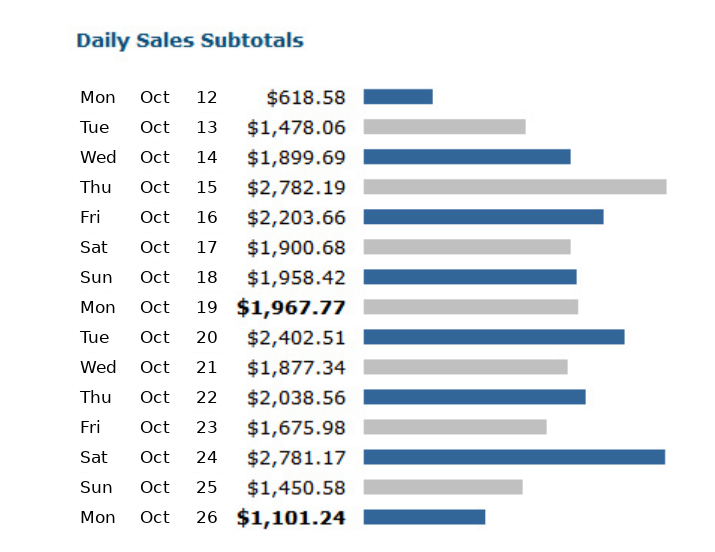
Here is the honest distinction from MLM: List Elevate pays you for sales, not for recruiting. The 25% matching bonus is a reward for teaching others — not a requirement to earn. You can build $1,000 a month without ever recruiting a single person. Here is real proof from marketers running the system:
The platform includes an Email Marketing Mastery course valued at $500, so you learn the skill as you build. You get a drag-and-drop editor, 600,000 emails per hour sending speed, and 99% inbox deliverability — all manageable from a phone. If you want the shortest route to real income, claim the List Elevate launch offer and the $500 bonus before the window closes.
2. GotBackup — recurring 25% on a real product
Cloud backup is unglamorous — and that is exactly why it pays. People pay for it month after month because their files are on the line. GotBackup pays 200% of the first month's subscription and 25% recurring on every month a customer stays active.
Retention is the whole game. Nobody cancels a service that protects their photos and documents. Your commission keeps arriving long after the sale. Stack 100 active referrals at $20 a month and you are looking at roughly $500 a month in passive income — from an actual product people need, not from a distributor pyramid. There is a team component too, but it is optional — not required to earn.
3. LockMyPosition — lock in traffic, protect the income
LockMyPosition fixes the problem every affiliate marketer eventually hits: your content does not rank, so nobody sees your links. This tool helps you lock in search positions and hold them, which feeds directly into your commissions.
If you are building a long-term income asset — a blog, a landing page, a review site — this is the piece most people skip and then wonder why their earnings stay flat. Ranking is the difference between "I posted a link" and "I get traffic every day without touching it." That is what turns a side hustle into real income — without any recruitment requirement.
How do I build real income without MLM?
Here is the exact sequence I would follow starting from zero:
- Pick one affiliate program you genuinely believe in. Start with List Elevate — the commissions and viral list-building make it the fastest route to first dollar.
- Grab your link and post it once with an honest recommendation. One post, done.
- Post one piece of content per day. A post, a short video, a story. One asset every day.
- Choose one traffic source and go deep. Pinterest, TikTok, Instagram Reels, or YouTube Shorts. One, not five.
- Build the list from day one. Traffic is rented. The list is owned.
- Layer in recurring income. Once List Elevate is producing, add GotBackup for monthly commissions on top.
- Lock your rankings. Once you have content, use LockMyPosition to hold the traffic that makes it all work.
Your first real income will land somewhere in weeks four to eight. That is the honest timeline. No starter kit, no recruitment, no monthly minimums — just content and consistency.
How long does it take to earn more than the average MLM participant?
Honest answer: 30 to 90 days for affiliate marketing. The average MLM participant earns under $1,000 per year — often less after accounting for required purchases, training events, and starter kits. According to FTC data, more than 99% of participants lose money when all costs are factored in.
Affiliate marketing is not a guarantee either, but the failure mode is different: you can fail at affiliate marketing by not working, but you cannot fail at it because someone above you takes your share. That structural difference is what makes affiliate marketing the better model for most people.
What mistakes stop people from earning through affiliate marketing?
- Confusing affiliate marketing with MLM. Affiliate marketing does not require recruitment or inventory.
- Paying to join an affiliate program. Legitimate affiliate programs are free to join.
- Buying inventory. If a program asks you to buy stock, it is likely not affiliate marketing.
- Promoting products you do not believe in. Readers notice immediately.
- Ignoring the email list. Traffic dies. The list survives.
- Quitting in week three. Most people stop right before results appear.
FAQ
What is the most profitable MLM?
By company revenue: Amway, Natura & Co, Herbalife, Vorwerk, and Coway. By participant profit, the honest answer is that no MLM is reliably profitable for most participants.
Do most MLM participants make money?
No. According to FTC data and independent research, more than 99% of MLM participants lose money when all costs are factored in.
Is it legal to join an MLM?
Yes, MLM is legal in the US and most countries as long as it is not operating as an illegal pyramid scheme. The legal distinction is whether income primarily comes from product sales or recruitment fees.
Is affiliate marketing a better alternative to MLM?
For most people, yes. Affiliate marketing pays for product sales, requires no recruitment, no inventory, and no starter kit. It is not capped by a downline hierarchy.
Can I combine MLM and affiliate marketing?
Technically yes, but the two models are often incompatible. If you want to build real, uncapped income, affiliate marketing is the better focus.
How much can I realistically earn from affiliate marketing?
Beginners typically earn $50–$500 per month in the first 60–90 days. By month 6–12, $500–$3,000+ per month is realistic. Top earners reach $10,000+ per month.
Can I do this entirely from my phone?
Yes. Every tool in this guide and every traffic source mentioned works from a phone.
Conclusion
So, what is the most profitable MLM? By company revenue, Amway leads a multi-billion-dollar field. But by participant profit — the answer that actually matters if you are considering joining — the honest truth is that MLMs are not reliably profitable for most people. Affiliate marketing pays for product sales, not for recruiting a downline, and it is the easiest method to make money from home with a real ceiling. Skip the pyramid, build the list. Start with List Elevate for the viral list, add GotBackup for recurring monthly income, and use LockMyPosition to lock in the traffic that makes it all work. Company revenue is not your income. Product sales are.
Earnings Disclaimer
Results are not guaranteed. This article describes methods and tools, not promises of income. Individual outcomes depend on your own effort, market conditions, and personal circumstances. Nothing on this page should be read as a guarantee of any specific earnings. Treat every income figure as an illustration, not a certainty.
Affiliate Disclaimer
This article contains affiliate links. If you purchase through one of them, the author may earn a commission at no additional cost to you. This does not influence the recommendations — the tools listed are ones the author genuinely uses and believes in. Always do your own research before joining any program.
About Barry McKinney

Hi, my name is Barry. I have over 25 years of experience in affiliate marketing and a strong interest in network marketing and MLM. I quit my job 25 years ago and built a business that now generates a consistent five-figure monthly passive income – all from the comfort of my own home. I’m passionate about online business, financial freedom, and helping others discover the opportunities that network marketing can offer.