Leased Ad Space
What's the Easiest Business to Start? The Structure Answer
Published by Barry McKinney — 10-29-2026 03:10:15 PM
The easiest business to start is one with no inventory, no premises, no staff, and no capital requirement — which in practice means a service business, a digital product business, or an affiliate marketing business. That definition sounds obvious, but almost every "easiest business" list recommends something that fails at least one of those four tests. A coffee cart needs premises. An e-commerce store needs inventory. A cleaning company needs staff and equipment. The businesses that are genuinely easiest to start are the ones where the only real input is your time and a laptop. This article ranks six business types by their actual structural barriers — not by how simple they sound in a marketing headline.
Key Takeaways
- The easiest business has no inventory, premises, staff, or capital requirement.
- Most "easy business" lists recommend models that fail at least one of those tests.
- Service, digital product, and affiliate businesses rank highest on structural simplicity.
- "Easy to start" and "easy to succeed" are different questions — starting is the first hurdle.
- Programs like ListElevate, GotBackup, and GreatLife Worldwide require no business setup at all.

What "Easy to Start" Actually Means
Before ranking business types, it is worth being precise about the word "easy." Most people use it to mean "simple to understand" or "doesn't sound intimidating." That is not what makes a business easy to start.
A business is genuinely easy to start when it has few structural barriers between you and your first customer. There are four barriers that matter, and each one adds time, money, and complexity.
The Four Barriers
| Barrier | What It Costs | What It Delays |
|---|---|---|
| Inventory | Capital tied up before any sale | Months of sourcing and stocking |
| Premises | Rent, deposit, utilities, insurance | Weeks of lease negotiation and setup |
| Staff | Wages, training, management time | Months of hiring and onboarding |
| Capital requirement | Money at risk before revenue | Time spent raising or saving it |
Read that table. Every barrier adds both money and time. A business with all four barriers takes months to start and can lose thousands before the first sale. A business with none of them can be started today.
The Simplicity Test
Apply four questions to any business idea:
- Do I need to buy stock before I can sell? If yes, that is an inventory barrier.
- Do I need a physical location? If yes, that is a premises barrier.
- Do I need to hire anyone? If yes, that is a staff barrier.
- Do I need to spend money before earning any? If yes, that is a capital barrier.
A business that answers "no" to all four is easy to start. A business that answers "yes" to two or more is not — regardless of how simple it sounds.
The 6 Easiest Business Types, Ranked
Here are the six business structures that rank highest on the simplicity test, ordered from easiest to hardest. Each one is assessed honestly against the four barriers.
| Business Type | Inventory | Premises | Staff | Capital | Overall |
|---|---|---|---|---|---|
| Affiliate marketing | No | No | No | $0–$15 | Easiest |
| Service business (freelance, consulting) | No | No | No | $0–$200 | Very easy |
| Digital products | No | No | No | $0–$500 | Easy |
| Print on demand | No (platform holds) | No | No | $100–$500 | Moderate |
| E-commerce / dropshipping | Yes | No | No | $500–$5,000 | Hard |
| Local service business | Yes (equipment) | Sometimes | Often | $500–$10,000 | Hardest |
Read the first row against the last. Affiliate marketing has zero barriers. A local service business has all four. Both are legitimate businesses — but only one can be started today for under $15.
1. Affiliate Marketing — No Barriers at All
Affiliate marketing is the easiest business to start because it removes every barrier simultaneously. You do not buy products, rent space, hire people, or invest capital.
Why It Is the Easiest
- No inventory — you never own the product.
- No premises — a laptop and a kitchen table are enough.
- No staff — the merchant handles fulfilment and support.
- No capital requirement — entry costs range from $0 to $15.
- No licensing or certification — nobody approves you.
The Honest Catch
"Easiest to start" is not "easiest to succeed." Affiliate marketing takes 3–6 months to produce meaningful income, and the first 60–90 days produce very little. Most people quit before the compounding begins. The starting barrier is nearly zero — the staying barrier is significant.
2. Service Business — No Inventory, No Premises
A service business — freelancing, consulting, tutoring, coaching — is the second easiest to start because you sell something you already have: your skill and your time.
Why It Is Very Easy
- No inventory — you sell expertise, not products.
- No premises — clients come to you online or you go to them.
- No staff — you are the business, at least initially.
- Low capital — a laptop and internet connection.
The Honest Catch
Service businesses are hour-bound. Your income is capped by the hours you can sell, and it stops when you stop working. It is the fastest path to income and the hardest path to scale.
3. Digital Products — No Barriers, But a Slow Start
Selling digital products — templates, guides, courses, planners — is structurally easy because you create once and sell repeatedly with no fulfilment cost.
Why It Is Easy
- No inventory — files are delivered automatically.
- No premises — online platforms handle everything.
- No staff — the platform processes orders.
- Low capital — free design tools are sufficient.
The Honest Catch
Digital products do not sell without an audience. Building that audience takes 6–12 months of content creation — which is a different kind of barrier: the time barrier. The business is structurally easy but the path to the first sale is long.
4. Print on Demand — Easy Structure, Thin Margins
Print on demand removes the inventory barrier by having the platform hold and ship products only when a sale occurs. That makes it structurally easier than e-commerce.
Why It Is Moderate
- No inventory — the platform holds stock.
- No premises — fully online.
- No staff — the platform handles shipping.
- Moderate capital — requires advertising to sell.
The Honest Catch
Margins are thin — typically 20–30% after product cost, platform fee, and advertising. Without a customer acquisition channel, sales do not happen. It is easier than e-commerce but not as easy as it appears.
5. E-commerce — Inventory Is a Real Barrier
E-commerce requires buying inventory before you can sell it. That single barrier makes it significantly harder to start than any of the four above.
Why It Is Hard
- Inventory required — capital tied up before any sale.
- No premises needed — but storage is a real cost.
- No staff needed — but fulfilment consumes time.
- Significant capital — $500–$5,000 to start properly.
The Honest Catch
Most beginners lose money on their first product. The business is legitimate and can be profitable, but it is not easy to start — it requires capital, product research, and the willingness to absorb losses while learning.
6. Local Service Business — The Hardest to Start
A local service business — cleaning, landscaping, moving, handyman — is the hardest to start of the six, because it involves every barrier at once.
Why It Is Hardest
- Equipment required — vehicles, tools, supplies.
- Often premises — storage or a base location.
- Often staff — you cannot scale alone.
- Significant capital — $500–$10,000+ to start.
- Licensing and insurance — additional barriers in most countries.
The Honest Catch
Local service businesses can be genuinely profitable and recession-resistant. But they are not easy to start — they require capital, equipment, staff, and regulatory compliance before the first customer arrives.
The Barriers Compared
| Business Type | Barriers | Time to First Customer | Money at Risk |
|---|---|---|---|
| Affiliate marketing | 0 | 2–8 weeks | $0–$15 |
| Service business | 0–1 | 1–4 weeks | $0–$200 |
| Digital products | 0–1 (audience) | 3–12 months | $0–$500 |
| Print on demand | 1 (advertising) | 1–3 months | $100–$500 |
| E-commerce | 2 (inventory, capital) | 1–6 months | $500–$5,000 |
| Local service business | 3–4 | 1–3 months | $500–$10,000+ |
Read the barriers column. Affiliate marketing has none. Local service has three to four. That is the entire distinction between "easy to start" and "hard to start."
Why Easy to Start Does Not Mean Easy to Succeed
This is the most important section in the article, and it is the one most "easy business" content omits.
A business with no barriers to entry has no barriers to entry for anyone else either. That means competition is high, differentiation is difficult, and the work required to stand out is significant.
The Two Different Questions
| Question | Answer |
|---|---|
| What is the easiest business to start? | Affiliate marketing, service business |
| What is the easiest business to succeed at? | One that matches your skills and you will stick with |
Read the second row. Success depends on fit, not on barriers. A business with no barriers that you quit in month two is harder to succeed at than a business with barriers you persist with for years.
The Real Barriers to Success
Once a business is started, the barriers that matter shift entirely:
- Consistency — do you keep working when results are slow?
- Skill development — do you get better over time?
- Trust building — do people believe you enough to buy?
- Patience — can you survive the 6–12 month lag before meaningful income?
None of those are structural. All of them are personal. That is why "easy to start" is a much less useful question than "which business will I actually build for a year."
The Business You Can Start Today
Here is the practical application of everything above. If your goal is to start a business today — actually today, not "when I'm ready" — these are the steps.
Step 1 — Choose a Zero-Barrier Business
Affiliate marketing, freelancing, or tutoring. All three can be started within an hour with no inventory, no premises, no staff, and under $15.
Step 2 — Set Up the Minimum Viable Version
| Component | Cost | Time |
|---|---|---|
| Affiliate program or service listing | $0–$15 | 30 min |
| Free link-in-bio page or profile | $0 | 15 min |
| Free email tool | $0 | 15 min |
| Free design tool | $0 | 15 min |
| Total | $0–$15 | ~75 min |
That is the entire setup. Under two hours, under $15, no paperwork, no premises, no hiring. That is what "easy to start" actually means.
Step 3 — Get the First Customer
For a service business, that means outreach. For affiliate marketing, that means publishing content and engaging with interested people. Both produce first income within 2–8 weeks.
Step 4 — Reinvest and Grow
Once the first customer arrives, reinvest the earnings into better tools, more content, or paid traffic. The business compounds from there.
The 3 Businesses That Require No Setup
If affiliate marketing is the path, these three programs are the most accessible starting points. None requires an application, a business registration, or a website.
1. GreatLife Worldwide — The Fastest Return on Entry Cost
GreatLife Worldwide is the fastest path to a first commission because the entry cost is the lowest and the payout speed is the highest of the three.
- $20 fast-start commission per referred affiliate member
- 50% matching bonus on qualifying matrix commissions
- Product commissions on qualifying orders
- Matrix commissions across multiple levels
- Diamond revenue pool and International Diamond pool (subject to qualification)
- Leadership bonuses and retail sales commissions
- Payouts advertised up to three times per week
The entry is $14.95, and one referral already returns more than the entry cost. Disclosure: the structure includes a matrix plan with matching bonuses, which places it closer to hybrid network marketing than pure single-tier affiliate marketing. That should be understood before joining.
Join GreatLife Worldwide and start earning $20 fast-start commissions today
2. ListElevate — The Highest Return Per Referral
ListElevate produces the largest commission per referral and includes the tools most beginners would otherwise have to buy or learn.
- 200% commissions on every direct referral
- 25% residual commissions for life on everything your referrals buy
- 25% matching check on your referrals' income — if a referral earns $10,000, you receive $2,500
- No cap on referrals or income
- Email marketing software included — 99% inbox deliverability, 600,000 emails per hour
- $500 Email Marketing Mastery bonus included free
- 30-day money-back guarantee
The included email software removes a setup cost that most beginners pay $20–$100 per month for. That makes the business structurally easier — one fewer thing to build.
Start building your list with ListElevate today — 200% commissions + $500 bonus
3. GotBackup — The Most Stable Income
GotBackup produces the most predictable income of the three, which matters for anyone who wants a business that does not require constant new sales.
- 200% of the first month's subscription paid immediately
- 25% recurring on every month the customer stays active
- Team component — earn on your referrals' referrals
At roughly 200 active referrals, the recurring stream alone produces about $1,000 per month. Because cloud backup is something nobody cancels, that base persists and grows — which makes this the most business-like of the three options.
Protect your data and earn recurring income with GotBackup
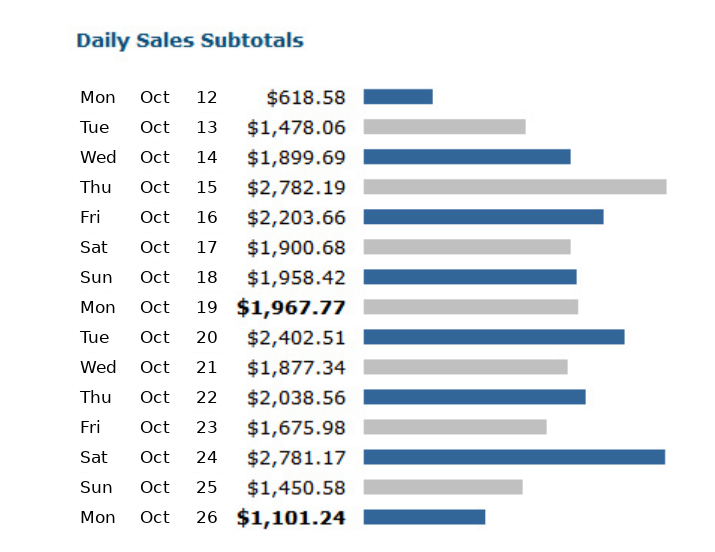
Real income proof from affiliates who started businesses with no inventory, premises, staff, or capital — individual results vary by effort, consistency, and market conditions.
Why Most People Choose the Harder Business
If zero-barrier businesses are easiest to start, why do most people choose businesses with inventory, premises, or staff?
The Three Reasons
- Tangibility feels real. A shop, a product, or a team feels like a business. Content, referrals, and lists feel like "not a real business" — even though they are.
- Social proof. Most visible businesses are the ones with premises and staff, because those are the ones you can see. Affiliate marketing is invisible.
- Misunderstanding of what a business is. Many people believe a business requires a product, a location, and employees. It does not — it requires customers and a way to serve them profitably.
That third reason is the most important. A business is not defined by its physical components. It is defined by whether it delivers value to customers for more than it costs to deliver. Affiliate marketing passes that test completely.
The 5 Mistakes People Make Starting a Business
- Choosing a business with barriers they cannot afford. Starting an e-commerce store with no capital or a service business with no equipment. Match the business to your resources.
- Confusing "easy to start" with "easy to succeed." A business you quit in month two is harder than a harder business you persist with.
- Waiting for the perfect setup. A website, a logo, a business registration — none of it produces customers. Start before the setup is finished.
- Spending money before earning. The easiest businesses require under $15 to start. Spending $500 on tools before the first commission is the fastest way to lose money.
- Quitting before the compounding begins. Every business takes 3–6 months to produce meaningful income. The people who succeed are the ones still working in month four.
Avoid all five and the business you choose becomes one you actually build — which is the only thing that determines whether it works.
Frequently Asked Questions
What's the easiest business to start?
Affiliate marketing is the easiest business to start because it has no inventory, no premises, no staff, and no capital requirement — entry costs range from $0 to $15. Service businesses (freelancing, consulting, tutoring) are second easiest. Both can be started today with a laptop and internet connection.
What is the easiest business to start with no money?
Affiliate marketing, freelancing, and tutoring all require under $15 to start. Affiliate marketing is the easiest overall because it also has no skills requirement to begin, no scheduled appointments, and builds an asset (an email list) that you own.
What is the easiest business to start from home?
Affiliate marketing, digital products, and service businesses all work entirely from home with no premises. Affiliate marketing is the simplest because it requires no product creation and no client meetings — just content and referrals.
Is it better to start a business with no barriers or a business with higher barriers?
For most people starting from zero, a zero-barrier business is better — because it can be started immediately without capital or risk. Higher-barrier businesses (e-commerce, local services) can be more profitable but require resources most beginners do not have.
What is the easiest business to start and make money fast?
Freelancing and tutoring produce income fastest (1–4 weeks) if you have a marketable skill. Affiliate marketing takes 2–8 weeks for the first commission but has no ceiling and builds an asset. A service business is faster; affiliate marketing is more scalable.
Do I need to register a business to start affiliate marketing?
In most places, no — at least not to begin. You can earn affiliate commissions as an individual. As income grows, you may need to declare it for tax purposes and consider registering a business entity. Check local regulations, but none of that is required to start.
Which affiliate program is easiest to start with?
GreatLife Worldwide is easiest to start with because the entry is $14.95 and the first commission ($20 per referral) returns more than the entry cost. ListElevate is best for higher commissions and included tools. GotBackup is best for predictable recurring income.
Conclusion — What's the Easiest Business to Start?
So, what's the easiest business to start? The one with no inventory, no premises, no staff, and no capital requirement. In practice, that means affiliate marketing, a service business, or digital products — all of which can be started today for under $15 with nothing more than a laptop.
The businesses that sound easiest — a coffee cart, an online store, a cleaning company — are actually the hardest to start, because they require inventory, premises, staff, or capital before the first customer arrives. "Easy" is not about how simple the idea sounds. It is about how few barriers stand between you and your first sale.
But the honest caveat matters as much as the answer. Easy to start does not mean easy to succeed. The barriers that determine success are not structural — they are consistency, skill development, trust building, and patience. A business with no barriers that you quit in month two is harder than a business with barriers you persist with for years.
The three affiliate programs that make starting genuinely effortless are GreatLife Worldwide ($14.95 entry, $20 per referral, fastest first commission), ListElevate (200% commissions plus included email software), and GotBackup (25% recurring income on a product everyone needs).
Choose a zero-barrier business. Set it up in under two hours. Get the first customer. And then — this is the part that actually matters — keep going past month two. The starting was always the easy part.
Earnings Disclaimer
Results are not guaranteed. The income examples, cost figures, and comparison data shown in this article are illustrative estimates drawn from individual experiences — they are not promises of future earnings. Business outcomes vary widely based on effort, skill, market conditions, and individual circumstances. Your results will depend entirely on your own work and the program or business you choose. No income claims are made or implied. Affiliate marketing requires real work, patience, and consistency — treat any program as a business, not a lottery ticket.
Affiliate Disclaimer
This article contains affiliate links. If you purchase a product through one of these links, the author may earn a commission at no additional cost to you. These commissions help support the creation of free content like this article. The presence of affiliate links does not influence the recommendations made here — the compensation structures of each program mentioned have been described as accurately as possible, including their matching, team, and matrix components, so readers can make an informed decision.
About Barry McKinney

Hi, my name is Barry. I have over 25 years of experience in affiliate marketing and a strong interest in network marketing and MLM. I quit my job 25 years ago and built a business that now generates a consistent five-figure monthly passive income – all from the comfort of my own home. I’m passionate about online business, financial freedom, and helping others discover the opportunities that network marketing can offer.