Leased Ad Space
What Small Business Is the Most Successful? The Survivorship Answer
Published by Barry McKinney — 10-29-2026 03:10:57 PM
The most successful small businesses are not the most exciting ones — they are the boring, recurring-revenue businesses that survive past year five. Industry data consistently suggests that roughly half of small businesses fail within five years, and about a fifth fail in the first year. The businesses that survive tend to share five structural traits: recurring revenue, low capital requirements, a specific niche, customer retention, and owner persistence. Accounting firms, cleaning services, plumbing contractors, and bookkeeping practices outlast trendy startups not because they are glamorous but because they are structurally durable. Understanding what "successful" actually means — and which structures produce survival — is far more useful than any list of business ideas.
Key Takeaways
- "Successful" means surviving and profitable — not just starting or trending.
- Roughly half of small businesses fail within five years, according to industry data.
- Boring, recurring-revenue businesses outlast trendy startups consistently.
- Five structural factors separate survivors from failures.
- Affiliate marketing is a small business — and it shares the traits that predict survival.

What "Successful" Actually Means
Before answering the question, it is worth being precise about the word "successful." Most people use it to mean "profitable" or "growing." But in small business data, the standard measure is survival — because a business that does not survive cannot be successful by any definition.
The Three Measures of Success
| Measure | What It Means | Why It Matters |
|---|---|---|
| Survival | Still operating after 5 years | The prerequisite for everything else |
| Profitability | Net positive after all costs | Revenue without profit is not success |
| Owner satisfaction | The owner would choose it again | Success that feels like failure is not success |
Read the first row. Survival is the foundation. A business that dies in year three may have had great revenue in year two — but it did not survive, which means it did not succeed.
Read the third row. Owner satisfaction matters more than most data captures. A business that survives and profits but leaves the owner exhausted and unhappy is not a success by any honest measure. That is why this article addresses both structure and fit.
The Survivorship Problem
Most "successful business" content is built on survivorship bias. It interviews people who succeeded, asks what they did, and presents that as a formula. But it never interviews the people who did the same things and failed — because they are not visible.
The honest question is not "what did successful businesses do?" but "what do survivors share that failures do not?" That requires looking at both groups — which is what the structural analysis below attempts to do.
What the Data Suggests About Survival
Industry data on small business survival is consistent across most developed economies, though the specific figures vary by country and sector. Here are the patterns that appear repeatedly.
| Timeframe | Approximate Survival Rate |
|---|---|
| 1 year | ~80–85% |
| 2 years | ~70% |
| 3 years | ~60% |
| 5 years | ~50% |
| 10 years | ~35% |
| 15+ years | ~25% |
These are illustrative figures drawn from general small business reporting. The exact numbers vary by country, sector, and methodology — but the shape is consistent: roughly half of businesses survive five years, and roughly a third survive ten.
Read the fifth row. That is the number that matters most. Only about one in three small businesses makes it to ten years. Those are the ones that actually succeeded — not just started.
Why Businesses Fail
The reasons for failure are remarkably consistent across studies. They are structural, not motivational.
- Cash flow problems — running out of money before the business stabilises.
- No market need — building something nobody wants to buy.
- Wrong team — partners who cannot work together.
- Competition — a better-funded or better-positioned competitor.
- Pricing problems — charging too little to sustain the business.
- Burnout — the owner cannot sustain the effort required.
Read the first item. Cash flow is the single most common cause of business failure. That is why low-capital businesses survive better — they do not run out of money because they did not need much to start.
The Counterintuitive Ranking of Successful Businesses
Here is the ranking that surprises most people. The most successful small businesses — by survival rate — are not the ones that appear in "startup" content. They are the boring ones.
| Business Type | Survival Profile | Why |
|---|---|---|
| Accounting and bookkeeping | Very high | Recurring clients, regulatory necessity |
| Cleaning and maintenance | Very high | Recurring contracts, low capital |
| Plumbing and electrical | Very high | Necessity, licensing limits competition |
| Healthcare practices | High | Recurring patients, demographic demand |
| Legal services | High | Recurring clients, high rates |
| Specialty food and beverage | Moderate | High failure rate despite visibility |
| E-commerce and retail | Moderate–low | Competition, thin margins, capital |
| Restaurants and hospitality | Low | High capital, thin margins, high turnover |
| Trendy startups | Variable | Often fail despite funding and attention |
Read the top three rows. Those are the businesses that quietly survive — sometimes for decades — because they are structurally necessary, recurring, and low-capital.
Read the bottom rows. Restaurants, retail, and trendy startups have the highest visibility and the highest failure rates. The inverse relationship between visibility and survival is one of the most consistent patterns in small business data.
Why the Boring Businesses Win
- Recurring revenue — clients return monthly or annually, not once.
- Necessity demand — nobody stops needing plumbing, bookkeeping, or cleaning.
- Low capital requirement — you can start with equipment and a vehicle, not a lease.
- Licensing barriers — reduce competition by limiting who can enter.
- Boring = invisible — fewer competitors enter because the category does not attract attention.
Read the last item. That is the paradox of small business success. The businesses that attract the most attention — restaurants, startups, e-commerce — attract the most competitors. The businesses that attract no attention have the least competition and the highest survival rates.
The 5 Structural Factors Survivors Share
Across every business type — from plumbing to affiliate marketing — the survivors share five structural traits. These are not motivational. They are the specific characteristics that predict whether a business will be operating in year five.
Factor 1 — Recurring Revenue
Businesses with recurring revenue survive better than businesses with one-time sales. A customer who pays every month is worth far more than a customer who pays once, because the business can plan, invest, and grow from a predictable base.
| Revenue Type | Survival Impact |
|---|---|
| One-time sales only | Low — every month starts at zero |
| Mix of one-time and recurring | Moderate — some stability |
| Mostly recurring | High — predictable base |
| Fully recurring (subscription) | Very high — compounding stability |
Read the bottom row. A fully recurring business has the highest survival rate because the base is predictable and compounds. That is why bookkeeping practices and cloud services outlast retail stores.
Factor 2 — Low Capital Requirements
Businesses that require less capital to start survive better — for a simple reason: they have less to lose. A business started with $500 cannot lose $50,000. A business started with $50,000 can lose all of it before it becomes profitable.
That does not mean low-capital businesses are always better. It means they have a structural survival advantage during the early years, when most businesses fail.
Factor 3 — A Specific Niche
Businesses that serve a specific audience survive better than businesses that try to serve everyone. A general "marketing agency" competes with thousands. A "marketing agency for dental practices" competes with dozens.
Specificity creates two survival advantages: it makes the business findable (narrow audiences search specifically) and it reduces competition (fewer businesses target the niche).
Factor 4 — Customer Retention
Businesses that keep their customers survive better than businesses that constantly need new ones. Retention determines whether each new customer is a one-time transaction or an ongoing relationship.
| Retention | What It Means for Survival |
|---|---|
| Low (one-time buyers) | Constant acquisition required |
| Moderate (some repeat) | Partial stability |
| High (ongoing relationships) | Compounding customer value |
Read the bottom row. High retention is the single most valuable trait a business can have, because it means the cost of acquiring a customer is spread over years instead of a single transaction.
Factor 5 — Owner Persistence
This is the factor that cannot be measured, designed, or automated. Businesses whose owners persist through the difficult early years survive at dramatically higher rates than businesses whose owners quit.
That is why every article about business success eventually returns to the same point. The structure matters, but so does the person. A well-structured business with an owner who quits in month six will fail. A less-structured business with an owner who persists can succeed.
The Honest Limitations of This Analysis
This is the section most content skips, and it matters more than the ranking itself.
What Survival Statistics Cannot Tell You
- Which business will suit you. Survival rates describe averages, not individuals. You might succeed in a low-survival category or fail in a high-survival one.
- How much you will earn. A surviving business can be modestly profitable or highly profitable. Survival is not the same as wealth.
- How long it will take. Some surviving businesses reach profitability in months; others take years.
- Whether you will enjoy it. A "successful" business you hate is not a success by the third measure above.
- What will work in your local market. National statistics can be irrelevant to your specific location and circumstances.
Read the first item. That is the most important limitation. The most successful business type on paper is worthless if you cannot run it well. Survival statistics describe categories — not the person operating inside the category.
The Three Questions Statistics Cannot Answer
| Question | Why It Matters More Than Survival Data |
|---|---|
| Will I enjoy running this for 5 years? | Owner persistence is the most important factor |
| Can I build this with my resources? | Capital and skills determine viability |
| Can I reach the first customers? | Acquisition is the most common failure point |
Read the first row. It is the single most important question in business planning — and it is the one no statistic can answer for you.
How This Applies to Affiliate Marketing
Affiliate marketing is a small business. It is not a job and not a side gig in the traditional sense — it is a business with the same structural questions as any other. That is why the five survival factors apply directly.
Affiliate Marketing Against the Five Factors
| Factor | Affiliate Marketing |
|---|---|
| Recurring revenue | Yes — recurring commissions from GotBackup and matching checks |
| Low capital requirement | Yes — $0–$15 to start |
| Specific niche | Yes — choose one niche and one audience |
| Customer retention | Yes — email list stays with you forever |
| Owner persistence | Depends entirely on the person |
Read the table. Affiliate marketing scores well on four of the five factors structurally. It also has one additional advantage most small businesses lack: the owner owns the asset. A plumber who quits leaves behind tools and a client list that may not transfer. An affiliate who quits still owns their email list.
The fifth factor — persistence — is the only one that cannot be engineered. Everything else can be structured.
Why Affiliate Marketing Fits the Survivor Profile
- No capital loss risk — the biggest cause of business failure.
- Recurring revenue possible — through programs like GotBackup.
- No premises or staff — removes two of the largest fixed costs.
- Owned asset — the email list continues to exist after the business stops.
- Low fixed costs — the business can be dormant without dying.
Read the last item. That is the survival advantage most small businesses lack. A restaurant with high rent and staff cannot be dormant — it bleeds cash every month. An affiliate business with $0 fixed costs can survive months of inactivity and restart without permanent damage.
The 3 Programs and Their Survival Fit
Here are the three programs most aligned with the survival profile described above, with honest disclosures about each structure.
1. GotBackup — The Recurring Foundation
GotBackup is the strongest fit for the recurring revenue factor — the most important predictor of business survival. Cloud backup is unglamorous — and that is exactly why it pays. Nobody cancels a service that protects their photos and documents.
- 200% of the first month's subscription paid immediately
- 25% recurring on every month the customer stays active
- Team component — earn on your referrals' referrals
At 200 active referrals, the recurring stream produces about $1,000 per month. Because retention in cloud storage is exceptionally high, that base continues to produce income month after month — which is precisely what the recurring-revenue survival factor predicts.
Protect your data and earn recurring income with GotBackup
2. ListElevate — The Asset Builder
ListElevate fits the customer retention and owned-asset factors — the two structural advantages that separate surviving businesses from failing ones.
- 200% commissions on every direct referral
- 25% residual commissions for life on everything your referrals buy
- 25% matching check on your referrals' income — if a referral earns $10,000, you receive $2,500
- No cap on referrals or income
- Email marketing software included — 99% inbox deliverability, 600,000 emails per hour
- $500 Email Marketing Mastery bonus included free
- 30-day money-back guarantee
The viral list-building system creates an asset the owner keeps permanently. That is the business equivalent of owning the building rather than renting it — the list survives even if the program or platform changes.
Start building your list with ListElevate today — 200% commissions + $500 bonus
3. GreatLife Worldwide — The Fast Starter
GreatLife Worldwide fits the low-capital requirement and produces the fastest early cash flow — which keeps the business alive during the fragile first months.
- $20 fast-start commission per referred affiliate member
- 50% matching bonus on qualifying matrix commissions
- Product commissions on qualifying orders
- Matrix commissions across multiple levels
- Diamond revenue pool and International Diamond pool (subject to qualification)
- Leadership bonuses and retail sales commissions
- Payouts advertised up to three times per week
Disclosure: the structure includes a matrix plan with matching bonuses, which places it closer to hybrid network marketing than pure single-tier affiliate marketing. That should be understood before joining — and it may not suit someone uncomfortable with recruitment.
Join GreatLife Worldwide and start earning $20 fast-start commissions today
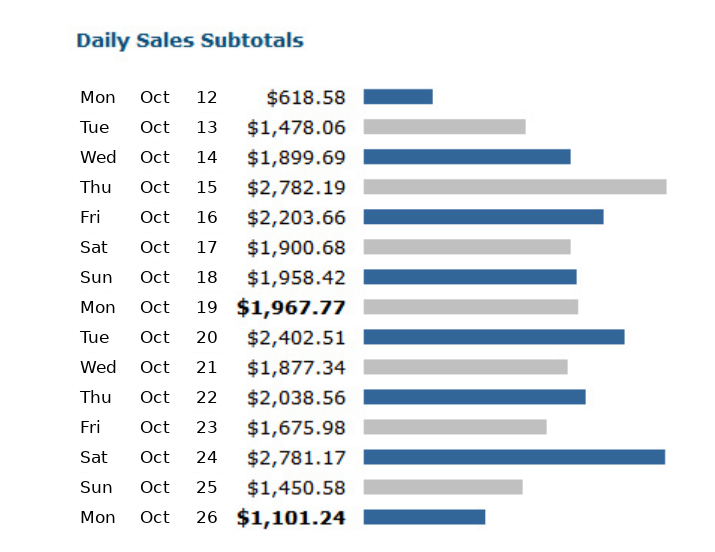
Real income proof from affiliates who built durable small businesses — individual results vary by effort, consistency, and market conditions.
The 5 Mistakes That Cause Small Business Failure
- Running out of cash. The single most common cause. Start with low capital requirements and keep a buffer.
- Building something nobody wants. Validate demand before committing. The businesses that survive sell what customers already want to buy.
- Charging too little. A business that cannot sustain itself on its revenue is not a business — it is a charity with overhead.
- Choosing visibility over viability. Restaurants and retail stores fail at higher rates than plumbing and bookkeeping, despite being far more visible.
- Quitting too early. Most businesses that fail do so because the owner stops, not because the business was impossible. Persistence is the factor that cannot be engineered.
Avoid all five and the business you build has a structurally higher chance of surviving the five-year mark.
Frequently Asked Questions
What small business is the most successful?
By survival rate, the most successful small businesses are accounting and bookkeeping practices, cleaning and maintenance services, plumbing and electrical contractors, healthcare practices, and legal services. They share five structural factors: recurring revenue, low capital requirements, a specific niche, high customer retention, and owner persistence.
What percentage of small businesses fail?
Industry data consistently suggests roughly 20% fail in the first year, about 50% fail within five years, and about 65% fail within ten years. The figures vary by country and sector, but the pattern — roughly half survive five years — is consistent across most developed economies.
Why do boring businesses outlast trendy startups?
Because boring businesses have structural advantages: recurring revenue from necessity-based clients, low capital requirements, licensing barriers that reduce competition, and low visibility that keeps new competitors from entering. Trendy startups attract attention — which attracts competitors, capital requirements, and higher failure rates.
Is affiliate marketing a small business?
Yes. Affiliate marketing is a small business with the same structural questions as any other. It scores well on four of the five survival factors: recurring revenue potential, low capital requirements, niche specificity, and customer retention. The fifth — owner persistence — depends entirely on the individual.
What is the most common reason small businesses fail?
Running out of cash. Cash flow problems are the leading cause of small business failure — which is why low-capital businesses survive better. They have less to lose and can operate through slow periods without running out of money.
What is the easiest small business to make successful?
There is no universally easiest business, but the one most aligned with your skills, resources, and temperament has the highest chance of success. That is why the five structural factors matter more than any specific category — a business that fits all five has a structural advantage regardless of type.
Which affiliate program best fits the small business survival profile?
GotBackup best fits the recurring revenue factor, which is the strongest predictor of survival. ListElevate best fits the owned-asset and customer retention factors through its viral list-building system. GreatLife Worldwide best fits the low-capital and fast cash flow factors, which matter most in the fragile early months.
Conclusion — What Small Business Is the Most Successful?
So, what small business is the most successful? By survival rate, it is the boring, recurring-revenue businesses that nobody talks about: accounting, cleaning, plumbing, bookkeeping, and healthcare practices. They outlast trendy startups because they share five structural traits — recurring revenue, low capital requirements, a specific niche, high customer retention, and owner persistence.
What makes these traits so predictive is that they are all structural except one. Capital, niches, retention, and recurring revenue can be engineered. The fifth factor — whether the owner persists through the difficult early years — cannot be. That is why every honest analysis of business success eventually returns to the same point: the structure matters, but so does the person.
Affiliate marketing fits the survivor profile well because it scores highly on four of the five factors and has one additional advantage — the owner owns the asset. An email list continues to exist even if the business goes dormant, which is a form of survival no physical business can match.
The three programs that best fit the survival factors are GotBackup (25% recurring income on a product nobody cancels), ListElevate (200% commissions plus a viral list-building system that creates a permanent asset), and GreatLife Worldwide ($20 fast-start commissions from a $14.95 entry with fast payouts).
But the honest limitation is worth repeating. Survival statistics describe averages, not individuals. The most successful business category on paper is worthless if you cannot run it well. The question that matters more than any ranking is the one no statistic can answer: can you see yourself still doing this in five years?
Earnings Disclaimer
Results are not guaranteed. The survival statistics, income examples, and comparison figures shown in this article are illustrative estimates drawn from general small business reporting and individual experiences — they are not promises of future earnings, and business outcomes vary widely. Your results will depend entirely on your own effort, skills, market conditions, capital, and the program or business you choose. No income claims are made or implied. Any business requires real work, patience, and consistency — treat any program as a business, not a lottery ticket.
Affiliate Disclaimer
This article contains affiliate links. If you purchase a product through one of these links, the author may earn a commission at no additional cost to you. These commissions help support the creation of free content like this article. The presence of affiliate links does not influence the recommendations made here — the compensation structures of each program mentioned have been described as accurately as possible, including their matching, team, and matrix components, so readers can make an informed decision.
About Barry McKinney

Hi, my name is Barry. I have over 25 years of experience in affiliate marketing and a strong interest in network marketing and MLM. I quit my job 25 years ago and built a business that now generates a consistent five-figure monthly passive income – all from the comfort of my own home. I’m passionate about online business, financial freedom, and helping others discover the opportunities that network marketing can offer.