Leased Ad Space
Whether $2,000 a month is livable depends on four variables, not one: where you live, how many people you support, whether you have existing debt, and whether it is your only income or a supplement. In many parts of the world, $2,000 a month supports a comfortable life. In major Western cities, it barely covers rent. For a single person with no dependants in a low-cost area, it is genuinely livable. For a family of four in an expensive city, it is not. There is no universal answer — but there is a specific answer for your situation, and this article walks through the variables that determine it.
Key Takeaways
- $2,000 a month is livable in many places — and not livable in others.
- Four variables determine the answer: location, household size, existing obligations, and income type.
- As a supplement to other income, $2,000 transforms a budget.
- As a sole income, it is tight in most developed cities.
- The honest answer is: it depends, and here is how to calculate your specific case.

Why There Is No Universal Answer
The question "is $2,000 a month livable" gets wildly different answers depending on who you ask — and they are all correct. Someone in rural Thailand on $2,000 a month is comfortable. Someone in central London on the same amount is in crisis. Both answers are honest, and neither generalises.
That is why this article does not give a single number. It gives the four variables that determine your specific answer, and a cost breakdown so you can calculate it yourself.
The Four Variables
| Variable | What It Determines |
|---|---|
| Location | How far $2,000 goes for housing, food, and transport |
| Household size | How many people the $2,000 must support |
| Existing obligations | Debt, loans, or fixed costs that cannot be reduced |
| Income type | Whether it is your only income or a supplement |
Read the table. Every one of those variables changes the answer dramatically. A single person in a low-cost area with no debt and a partner who also earns is in a completely different situation from a single parent in an expensive city with $800 in monthly debt repayments.
The honest answer to "is $2,000 livable" is therefore: for some people, yes — for others, no — and you need to calculate your specific case.
The Cost-of-Living Breakdown
Here is what $2,000 actually has to cover, and how it varies by region. These are illustrative ranges based on typical costs, not precise budgets.
Core Monthly Costs
| Category | Low-Cost Area | Mid-Cost Area | High-Cost City |
|---|---|---|---|
| Rent (1-bed or room) | $300–$600 | $700–$1,200 | $1,500–$2,500+ |
| Utilities | $50–$100 | $100–$200 | $150–$300 |
| Food | $200–$350 | $300–$500 | $400–$700 |
| Transport | $50–$100 | $100–$200 | $100–$250 |
| Phone + internet | $30–$60 | $60–$100 | $80–$150 |
| Insurance | $50–$150 | $100–$250 | $150–$400 |
| Total | $680–$1,360 | $1,360–$2,450 | $2,380–$4,300 |
Read the bottom row. In a low-cost area, $2,000 leaves $640–$1,320 after core costs. In a high-cost city, $2,000 does not even cover the core costs — let alone anything else.
That table is the entire answer in compressed form. The same $2,000 is comfortable in one place and impossible in another, because the cost of the essentials varies by a factor of three or more.
What "Livable" Means
There is an important distinction between surviving and living. "Livable" can mean:
- Survivable: covers shelter, food, and transport, with nothing left over.
- Livable: covers essentials plus some discretionary spending and savings.
- Comfortable: covers essentials, savings, and meaningful discretionary spending.
Read the second line. Most people asking "is $2,000 livable" mean the second definition — not just surviving but having some quality of life. That is the standard this article uses.
The Single Person Scenario
For a single person with no dependants, $2,000 a month is livable in most of the world outside major Western cities.
The Breakdown
| Category | Low-Cost Area | Mid-Cost Area | High-Cost City |
|---|---|---|---|
| Core costs | $680–$1,360 | $1,360–$2,450 | $2,380–$4,300 |
| Remaining from $2,000 | $640–$1,320 | $0–$640 | Negative |
| Livable? | Yes — comfortable | Tight but possible | No |
Read the third row. In a low-cost area, $2,000 a month is comfortable for a single person. In a mid-cost area, it is tight — possible but requires discipline. In a high-cost city, it is not viable.
What Makes the Difference
- Housing: the largest single variable by far. A room instead of an apartment can halve the cost.
- Car ownership: in areas with public transport, not owning a car saves $300–$600 per month.
- Debt: a $300 per month loan payment can make a livable budget impossible.
- Geographic flexibility: the ability to live in a lower-cost area is worth more than most income increases.
The Family Scenario
For a family — even a small one — the answer changes dramatically. $2,000 a month rarely supports more than one person in most developed economies.
The Breakdown (Family of Four)
| Category | Low-Cost Area | Mid-Cost Area | High-Cost City |
|---|---|---|---|
| Rent (2–3 bed) | $500–$900 | $1,200–$2,000 | $2,500–$4,500+ |
| Utilities | $100–$200 | $200–$350 | $300–$500 |
| Food | $400–$700 | $600–$1,000 | $800–$1,400 |
| Transport | $100–$200 | $200–$400 | $300–$500 |
| Phone + internet | $60–$120 | $120–$200 | $150–$250 |
| Insurance | $100–$300 | $200–$500 | $400–$800 |
| Childcare or school costs | $0–$200 | $200–$1,200 | $1,000–$3,000 |
| Total | $1,260–$2,620 | $2,520–$5,650 | $5,450–$10,950 |
Read the bottom row. Even in a low-cost area, a family of four needs at least $1,260 per month just for essentials — and that is before childcare, debt, savings, or anything discretionary. In most developed cities, a family needs $3,000–$6,000 minimum.
That is why $2,000 is livable for a single person in many places and not livable for a family in almost any developed country.
Where $2,000 Does Support a Family
There are places where $2,000 a month supports a family comfortably — mostly in lower-cost countries, rural areas, or with significant lifestyle choices (no car, smaller home, home cooking). In those places, it is genuinely livable.
But those situations require specific geographic and lifestyle conditions that most people cannot simply choose. The honest answer for a family in a typical developed-country city is: no, $2,000 is not enough.
The Supplement Scenario
The picture changes dramatically when $2,000 a month is a supplement rather than a sole income.
What $2,000 Adds When It Is Not Your Only Income
| Existing Situation | What $2,000 Adds |
|---|---|
| Earning $2,000 from a job | Doubles income — transforms the budget entirely |
| Earning $3,000 from a job | Adds 67% — moves from tight to comfortable |
| Earning $4,000 from a job | Adds 50% — meaningful savings and discretionary |
| Earning $6,000 from a job | Adds 33% — full financial security and investment capacity |
Read the first row. As a supplement to even a modest income, $2,000 is transformative. It covers rent, or a car payment plus savings, or debt repayment that would otherwise take years.
That is why the question changes entirely when framed as "extra income" rather than "only income." Most people searching for $2,000 a month are not trying to live on it alone — they are trying to add it to what they already earn. In that context, it is almost always livable, because it is not the thing that has to be lived on.
The Critical Variables That Change the Answer
Beyond location and household size, four specific factors dramatically change whether $2,000 is livable.
1. Housing Costs
Housing is the single largest variable. In a low-cost area, rent might be $400. In a high-cost city, the same apartment costs $2,500. That single difference determines whether $2,000 is comfortable or impossible.
Owning a home outright, living with family, or sharing housing can dramatically reduce this cost — sometimes to zero. Those situations make $2,000 livable where it otherwise would not be.
2. Existing Debt
A $500 monthly loan payment reduces the effective income from $2,000 to $1,500. Two or three such payments can make even a low-cost area unlivable.
Debt is the second-largest variable after housing, and it is the one most people overlook when calculating whether an income is livable.
3. Transportation
Not owning a car saves $300–$600 per month in most places. In areas with good public transport, this is a significant factor in making $2,000 work. In areas where a car is essential, it becomes another fixed cost.
4. Geographic Flexibility
The ability to live where costs are low is worth more than most income increases. Someone earning $2,000 in a low-cost area can live comfortably. Someone earning $3,000 in an expensive city can be struggling.
Read that comparison again. It is the most important insight in this article. Income is only meaningful relative to costs.
So Is $2,000 a Month Livable? The Honest Verdict
Here is the answer, broken down by situation.
| Situation | Livable? | Notes |
|---|---|---|
| Single, low-cost area, no debt | Yes — comfortable | Room for savings and discretionary spending |
| Single, mid-cost area, no debt | Yes — tight | Requires discipline but possible |
| Single, high-cost city | No | Rent alone exceeds the income |
| Couple, low-cost area | Yes — if both earn or costs are shared | Two incomes on $2,000 each is comfortable |
| Family of four, low-cost area | Barely | Essentials only, no savings or discretionary |
| Family of four, mid/high-cost area | No | Essentials exceed $2,000 |
| Any situation as a supplement | Yes | Adds significantly to existing income |
Read the first and last rows. Those are the situations where $2,000 a month works best — single in a low-cost area, or as a supplement to other income. Read the third and sixth rows. Those are the situations where it does not.
How to Make $2,000 Livable in Almost Any Situation
If you need $2,000 to stretch further than it naturally would, these are the levers that make the biggest difference — in order of impact.
Lever 1 — Reduce Housing Costs
Housing is the largest expense. A smaller home, a shared living situation, a lower-cost area, or living with family can reduce this category by 30–70%. That single change makes the largest difference to whether $2,000 is livable.
Lever 2 — Eliminate Vehicle Costs
A car costs $300–$600 per month in total — payment, insurance, fuel, maintenance. Living without one where possible is the second-largest savings.
Lever 3 — Reduce Fixed Debt
Paying down high-interest debt eliminates monthly payments permanently. A single $300 payment removed is $3,600 per year back in the budget.
Lever 4 — Meal Planning and Home Cooking
Food is the third-largest variable. Cooking at home rather than buying prepared food can reduce the food bill by 40–60% — often $200–$400 per month.
Lever 5 — Increase Income
The final lever is the most obvious and the most durable. Increasing income from $2,000 to $2,500 or $3,000 makes $2,000 livable — because you now earn more than $2,000. That is why the question "is $2,000 livable" is often the wrong question. The right question is: how do I earn more than $2,000?
The $2,000 Income Building Path
If $2,000 is not enough for your situation, the answer is not to squeeze it further. It is to earn more. Here is the realistic path to adding $2,000 per month in extra income — the topic this article is often paired with.
The Three Streams
| Stream | Monthly Contribution | What It Requires |
|---|---|---|
| Recurring affiliate (GotBackup) | $1,000 | ~200 active referrals at 25% |
| High-ticket affiliate (ListElevate) | $800 | ~1–2 sales at $500–$1,000 |
| Fast-start / matching (GreatLife) | $200 | ~10 referrals plus matching bonuses |
| Total | $2,000 | 3–9 months of building |
Read the total row. $2,000 extra per month from three affiliate streams, built over 3–9 months alongside existing income. That is the realistic path to making $2,000 livable — by earning $2,000 in addition to what you already have.
The three programs that produce that layer are the same ones recommended throughout this series.
1. GotBackup — The Recurring Base
GotBackup produces the most stable income of the three, and recurring commissions mean the same customer pays every month.
- 200% of the first month's subscription paid immediately
- 25% recurring on every month the customer stays active
- Team component — earn on your referrals' referrals
At roughly 200 active referrals, the recurring stream produces about $1,000 per month — half the $2,000 target from a single stream.
Protect your data and earn recurring income with GotBackup
2. ListElevate — The High-Ticket Stream
ListElevate produces the largest per-sale income and includes the tools most beginners would otherwise pay for.
- 200% commissions on every direct referral
- 25% residual commissions for life on everything your referrals buy
- 25% matching check on your referrals' income — if a referral earns $10,000, you receive $2,500
- No cap on referrals or income
- Email marketing software included — 99% inbox deliverability, 600,000 emails per hour
- $500 Email Marketing Mastery bonus included free
- 30-day money-back guarantee
At a $500 commission, roughly 1–2 sales per month produces $500–$1,000. The matching check adds income from referrals' activity.
Start building your list with ListElevate today — 200% commissions + $500 bonus
3. GreatLife Worldwide — The Momentum Stream
GreatLife Worldwide produces the fastest first commission and the strongest matching income as your network grows.
- $20 fast-start commission per referred affiliate member
- 50% matching bonus on qualifying matrix commissions
- Product commissions on qualifying orders
- Matrix commissions across multiple levels
- Diamond revenue pool and International Diamond pool (subject to qualification)
- Leadership bonuses and retail sales commissions
- Payouts advertised up to three times per week
Disclosure: the structure includes a matrix plan with matching bonuses, which places it closer to hybrid network marketing than pure single-tier affiliate marketing. That should be understood before joining.
Join GreatLife Worldwide and start earning $20 fast-start commissions today
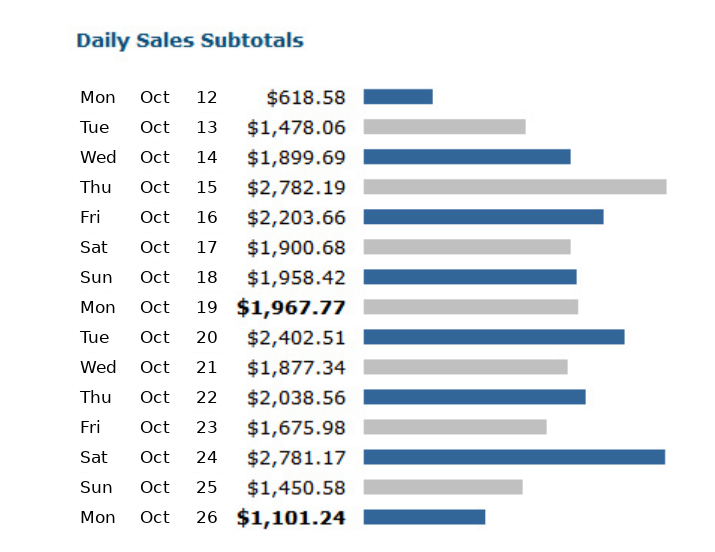
Real income proof from affiliates building $2,000/month alongside existing income — individual results vary by effort, consistency, and market conditions.
The Budget Reality Check
Here is the honest calculation anyone considering living on $2,000 should run before assuming it will work.
The Four-Question Test
- What is my rent or mortgage? If it is more than 40% of $2,000 ($800), the budget is already under strain.
- What are my fixed monthly obligations? Debt payments, insurance, childcare, subscriptions — all of it.
- What is my realistic food and transport cost? Not the ideal — the actual.
- What is left after everything? If the answer is $0 or negative, $2,000 is not livable for you.
A Realistic Example
| Category | Amount |
|---|---|
| Rent (single, mid-cost area) | $900 |
| Utilities | $150 |
| Food | $400 |
| Transport | $150 |
| Phone + internet | $80 |
| Insurance | $150 |
| Debt repayment | $200 |
| Total fixed costs | $2,030 |
| Income | $2,000 |
| Remaining | −$30 |
Read the bottom row. In this realistic example, $2,000 is not livable — it leaves a deficit of $30 before any discretionary spending. That is exactly the situation most people are in when they ask this question.
Run this calculation for your own situation. It takes 10 minutes and produces the specific answer that no general article can give you.
The 5 Mistakes People Make With a $2,000 Budget
- Assuming it is livable because it sounds like a lot. $2,000 sounds substantial until you calculate rent. The figure is meaningless without cost context.
- Ignoring debt payments. The most common blind spot. Debt reduces effective income, and most budgets overlook it.
- Comparing to others instead of your own costs. Someone living with their parents on $2,000 is comfortable. Someone renting alone in a city on $2,000 is not. Comparison is useless here.
- Not including savings. A budget that covers essentials but leaves nothing for savings is not livable — it is barely survivable.
- Assuming it will always be $2,000. Income that does not grow is a plan that does not work. The answer is not to make $2,000 livable — it is to earn more than $2,000.
Avoid all five and the answer to "is $2,000 livable" becomes specific and honest rather than general and misleading.
Frequently Asked Questions
Is 2k a month livable?
It depends on four variables: location, household size, existing obligations, and whether it is your only income. For a single person with no dependants in a low-cost area, $2,000 a month is comfortable. For a family in a high-cost city, it is not livable. As a supplement to other income, it is transformative.
Can you live on $2,000 a month?
Yes, in many parts of the world — especially low-cost countries, rural areas, and situations where housing costs are shared or minimal. No, in most major Western cities, where rent alone can exceed $2,000. The answer depends almost entirely on where you live.
Is $2,000 a month enough for one person?
In a low-cost area, yes — it covers essentials plus savings and discretionary spending. In a mid-cost area, it is tight but possible. In a high-cost city, it is not enough because rent alone often exceeds $1,500. Housing cost is the deciding factor.
Is $2,000 a month enough for a family?
Rarely in developed countries. A family of four typically needs $3,000–$6,000 per month for essentials in most Western cities. In a low-cost area with minimal housing costs, $2,000 might cover essentials but leaves no room for savings or discretionary spending.
How much is $2,000 a month per hour?
At a standard 40-hour week (173 hours per month), $2,000 per month equals roughly $11.56 per hour. At 20 hours per week, it equals $23.08 per hour. That comparison is only meaningful if you are trading hours for income directly.
Can I live on $2,000 a month and save?
Yes — but only in specific situations: low housing costs, no debt, and a low-cost area. In those conditions, $2,000 can allow $100–$300 per month in savings. In most mid-cost areas, there is little or nothing left to save.
What should I do if $2,000 is not livable for me?
Two options: reduce costs or increase income. Reducing housing and transport costs has the largest effect. Increasing income by $500–$1,000 per month is the more durable solution — and that is the path most people take, through side income like affiliate marketing or freelancing.
Conclusion — Is 2K a Month Livable?
So, is $2,000 a month livable? The honest answer is: it depends — on four specific variables. In a low-cost area with no dependants and no debt, it is comfortable. In a high-cost city with a family and obligations, it is not. As a supplement to existing income, it is transformative.
The most important insight is that the question itself may be the wrong one. Income is only meaningful relative to costs. Someone earning $2,000 in a low-cost area is more comfortable than someone earning $3,000 in an expensive city. That single comparison changes the entire framing.
If $2,000 is not livable for your specific situation, the answer is not to squeeze it further. It is to increase it. And the most accessible way to add $2,000 per month is through affiliate income — building three streams over 3–9 months while keeping your existing income.
The three programs that produce that layer are GotBackup (25% recurring income, roughly 200 active referrals to produce $1,000 per month), ListElevate (200% commissions plus matching checks and included email software), and GreatLife Worldwide ($20 fast-start commissions from a $14.95 entry with 50% matching bonuses).
Run the four-question budget test for your own situation. If $2,000 works, it works — and you can build from there. If it does not, the honest answer is not a better budget. It is a higher income. And $2,000 is a realistic starting point, not a ceiling.
Earnings Disclaimer
Results are not guaranteed. The cost estimates, income examples, and budget figures shown in this article are illustrative ranges drawn from general cost-of-living data and individual experiences — they are not precise financial advice and vary widely by location and circumstance. Your results will depend entirely on your own situation, effort, and choices. No income claims or financial advice are made or implied. Affiliate marketing requires real work, patience, and consistency — treat any program as a business, not a lottery ticket.
Affiliate Disclaimer
This article contains affiliate links. If you purchase a product through one of these links, the author may earn a commission at no additional cost to you. These commissions help support the creation of free content like this article. The presence of affiliate links does not influence the recommendations made here — the compensation structures of each program mentioned have been described as accurately as possible, including their matching, team, and matrix components, so readers can make an informed decision.
About Barry McKinney

Hi, my name is Barry. I have over 25 years of experience in affiliate marketing and a strong interest in network marketing and MLM. I quit my job 25 years ago and built a business that now generates a consistent five-figure monthly passive income – all from the comfort of my own home. I’m passionate about online business, financial freedom, and helping others discover the opportunities that network marketing can offer.