Leased Ad Space
How Much Is $2,000 a Month Hourly? The Real Rate
Published by Barry McKinney — 10-29-2026 03:10:14 PM
At a standard 40-hour week, $2,000 a month equals about $11.56 per hour — but that number is misleading, because almost nobody who earns $2,000 a month actually works only 173 hours. A salaried employee works 40 hours plus unpaid lunch breaks, commuting, and preparation. A freelancer works billable hours plus admin, marketing, and client management. A side hustler works their job plus their hustle. The question "how much is $2,000 a month hourly" has at least five different answers depending on which hours you count — and the honest one usually lands lower than the simple calculation suggests.
Key Takeaways
- $2,000/month ÷ 173 hours = $11.56/hour — the standard calculation.
- That figure is almost always wrong in practice because it counts only paid hours.
- There are five different hourly rates depending on which hours you include.
- Salary, freelance, and side-hustle income produce very different effective rates at the same monthly figure.
- The honest calculation includes preparation, admin, commute, and unpaid build time.

The Simple Math (And Why It Misleads)
Let's start with the calculation everyone uses, because it is the correct starting point — it is just not the ending point.
The Standard Conversion
| Hours Per Week | Hours Per Month | $2,000/Month Is |
|---|---|---|
| 40 | ~173 | $11.56/hour |
| 35 | ~152 | $13.16/hour |
| 30 | ~130 | $15.38/hour |
| 20 | ~87 | $22.99/hour |
| 10 | ~43 | $46.51/hour |
| 5 | ~22 | $90.91/hour |
Read the top row. Forty hours per week is the standard assumption, and it produces $11.56 per hour. Read the bottom row. Five hours per week produces $90.91 per hour from the same monthly income.
Same $2,000. Radically different hourly rate. That single table is the entire reason this question has no fixed answer — the rate depends entirely on the hours, and the hours depend entirely on the work.
Why the Standard Figure Is Usually Wrong
The $11.56 figure assumes two things that are almost never true: that you work exactly 40 hours per week, and that all of those hours are paid.
In reality, almost no one earning $2,000 a month works exactly 173 hours — and almost everyone works more hours than they are paid for. That gap is what this article is about.
The Five Different Hourly Rates
Here is the core insight. Depending on which hours you count, $2,000 a month converts to five completely different hourly rates. Most people use the first one. The honest one is the last.
| Measure | Hours Counted | Hourly Rate |
|---|---|---|
| 1. Nominal | Paid hours only | $11.56 |
| 2. Working | Paid hours + unpaid breaks | ~$10.50 |
| 3. Commute-inclusive | Working hours + commuting | ~$9.00 |
| 4. Preparation-inclusive | All of the above + prep and admin | ~$7.50–$8.50 |
| 5. True rate | Every hour the income requires | $6–$9 typically |
Read the first and last rows together. The nominal rate is $11.56. The true rate is often closer to $7. The difference is the hidden hours — the time you spend on work that is required to earn the income but is not itself paid.
That gap is not a rounding error. It is a 30–40% difference in what your time is actually worth.
The Hidden Hours Problem
Here is what the nominal calculation leaves out. Every one of these hours is required to earn the $2,000 — but none of them appears in the paid-hours figure.
What Counts as a Hidden Hour
| Hidden Hour | Typical Weekly Amount |
|---|---|
| Unpaid lunch breaks | 2.5–5 hours |
| Commuting | 3–7 hours |
| Getting ready for work | 2–4 hours |
| Checking email outside hours | 1–3 hours |
| Admin, invoicing, paperwork | 1–4 hours (freelance/self-employed) |
| Marketing and client acquisition | 2–6 hours (self-employed) |
| Skill development and learning | 1–5 hours |
Read the second row. Commuting alone adds 3–7 hours per week — which is 13–30 hours per month. On a $2,000 monthly income, that is a $65–$150 reduction in the effective hourly rate.
Add unpaid breaks, preparation, email, and skill development, and the total hidden hours often exceed the paid hours themselves.
The Recalculated Rate
| Hours Included | Weekly Hours | Monthly Hours | Rate for $2,000 |
|---|---|---|---|
| Paid only | 40 | 173 | $11.56 |
| + unpaid breaks | 44 | 190 | $10.53 |
| + commuting | 50 | 217 | $9.22 |
| + preparation | 54 | 234 | $8.55 |
| + skill development | 58 | 251 | $7.97 |
Read the top and bottom rows. The nominal rate is $11.56. The true rate is $7.97. That is a 31% reduction — and it is entirely real.
This is why so many people feel underpaid even when their nominal rate looks acceptable. They are calculating their rate on the wrong number of hours.
How the Rate Changes by Income Type
The hidden-hours problem varies dramatically depending on how the $2,000 is earned. Here is the honest comparison.
Salaried Employment at $2,000/Month
| Hours Counted | Weekly | Rate |
|---|---|---|
| Contract hours | 40 | $11.56 |
| + lunch and commute | 50 | $9.22 |
| + overtime and email | 54 | $8.55 |
| True rate | ~54 | ~$8.55 |
Read the last row. A salaried $2,000 per month typically produces a true rate of $8–$9 per hour once commute and unpaid time are counted. That is a real and often overlooked cost of employment.
Freelancing at $2,000/Month
Freelancing has a different hidden-hours structure. There is usually no commute, but there is substantial unpaid admin, marketing, and client management.
| Activity | Weekly Hours |
|---|---|
| Billable work | 25–30 |
| Client acquisition and marketing | 4–8 |
| Admin, invoicing, email | 3–6 |
| Skill development | 2–4 |
| Total | 34–48 |
Read the bottom row. A freelancer earning $2,000 per month may work 34–48 hours per week. At 40 hours, that is $11.56 per hour — the same as the salaried rate. The difference is that the freelancer keeps more of the gross (no employer deductions), but spends more time on unpaid work.
The true rate for a freelancer earning $2,000 per month is typically $10–$12 per hour — higher than the salaried equivalent, but only because there is no commute.
Side Hustle at $2,000/Month
This is where the calculation becomes most interesting — and where the true rate depends entirely on the structure of the side hustle.
| Side Hustle Type | Hours/Week | Rate for $2,000 |
|---|---|---|
| Delivery driving (top-up) | 110 | $4.20 |
| Freelancing (part-time) | 50 | $9.22 |
| Tutoring (part-time) | 45 | $10.26 |
| Content creation (first year) | 60+ | Under $5 |
| Affiliate (built, year 2+) | 15–25 | $20–$33 |
Read the top row. A side hustler trying to earn $2,000 per month through delivery driving would need roughly 110 hours per week at $18 per hour net — which is impossible. That is why delivery driving is a top-up method, not a $2,000 method.
Read the bottom row. An affiliate business that has been built produces $2,000 per month on 15–25 hours per week. That is $20–$33 per hour — genuinely the highest rate on the list, because the asset is doing most of the work.
The Full Comparison
| Income Type | Nominal Rate | True Rate | Difference |
|---|---|---|---|
| Salaried employment | $11.56 | $8.55 | −26% |
| Freelancing | $11.56 | $10–$12 | −5% to +4% |
| Tutoring | $11.56 | $10.26 | −11% |
| Delivery driving | $11.56 | ~$4.20 | −64% |
| Content creation (year 1) | $11.56 | Under $5 | −60%+ |
| Affiliate (built, year 2+) | $11.56 | $20–$33 | +73% to +185% |
Read the last column. Most income types produce a true rate lower than the nominal calculation. Only a built affiliate business produces a true rate that is dramatically higher — because the hours required to maintain $2,000 per month are far fewer than the hours required to earn it in year one.
The Legal and Employment Angle
There is a second reason this question matters: the legal definition of "hourly" is not the same as the practical calculation.
When "Hourly" Is a Legal Term
In many jurisdictions, an "hourly employee" has specific legal protections: minimum wage, overtime pay, break requirements, and record-keeping obligations. A salaried employee does not have the same rights, even if their effective hourly rate is lower than minimum wage.
| Factor | Hourly Employee | Salaried Employee |
|---|---|---|
| Overtime pay | Yes, typically | Often no |
| Minimum wage protection | Yes | Not directly |
| Paid breaks | Usually protected | Varies |
| Effective hourly rate | Known and fixed | Varies with hours worked |
Read the last row. An hourly employee knows their rate. A salaried employee's effective rate depends entirely on how many hours they actually work — which is why salaried roles that require overtime can push the effective rate below minimum wage.
If you are evaluating a job offer, calculate the true hourly rate before accepting. A $2,000 per month salary that requires 60 hours per week is $7.69 per hour, not $11.56.
What This Means for Freelancers
Freelancers face a similar issue. A client paying $500 for a project does not know how many hours it will take. If the project takes 20 hours, the rate is $25 per hour. If it takes 60 hours, the rate is $8.33.
That is why experienced freelancers quote by project rather than by hour — and why they track their actual hours to see whether a project was profitable.
How to Calculate Your Real Hourly Rate
Here is the exact process. It takes about fifteen minutes and produces a more honest answer than any calculator.
Step 1 — Total Your Income
Use your net income (after tax) rather than gross, because that is what you actually receive. For a $2,000 gross monthly salary, the net figure is typically $1,500–$1,700 depending on your jurisdiction.
Step 2 — Count Every Hour
Not just paid hours. Include:
- Paid working hours.
- Unpaid breaks and lunches.
- Commuting time.
- Getting ready for work.
- Email and messages outside hours.
- Admin and paperwork.
- Marketing and client acquisition (self-employed).
- Skill development and learning.
- Unpaid build time (for side hustles and businesses).
Step 3 — Divide
Net income ÷ total hours = your true hourly rate.
Worked Example — Salaried
| Item | Value |
|---|---|
| Gross monthly income | $2,000 |
| Net after tax | ~$1,600 |
| Paid hours | 173 |
| Unpaid breaks | 17 |
| Commute | 30 |
| Preparation | 12 |
| Outside-hours email | 8 |
| Total hours | 240 |
| True hourly rate | $6.67 |
Read the bottom row. A $2,000 gross salary, after tax and real hours, produces roughly $6.67 per hour. That is the honest number — and it is far below the nominal $11.56.
Worked Example — Built Affiliate Business
| Item | Value |
|---|---|
| Gross monthly income | $2,000 |
| Net after minimal costs | ~$1,950 |
| Content and engagement | 60 |
| Admin and tracking | 8 |
| Total hours | 68 |
| True hourly rate | $28.68 |
Read the bottom row. The same $2,000 produces $28.68 per hour in a built affiliate business, because the asset does most of the work and there is no commute, no unpaid breaks, and no outside-hours obligation.
That comparison — $6.67 versus $28.68 for the same monthly figure — is the entire argument for building income rather than trading hours for it.
What $2,000 a Month Really Means
Here is the honest summary of every calculation above.
| Situation | Nominal | True Rate |
|---|---|---|
| 40-hour salaried job | $11.56 | $8.55 |
| 40-hour salaried job with long commute | $11.56 | $7.50 |
| Freelance (25 billable hours/week) | $18.50 | $10–$12 |
| Delivery driving | $18.50 | $4.20 |
| Content creation (year 1) | — | Under $5 |
| Built affiliate business | — | $20–$33 |
Read the last row. A built affiliate business is the only income type on this list whose true rate exceeds the nominal $11.56 — often by a factor of two or three.
That is not because affiliate marketers work harder. It is because a built business requires fewer hours to maintain the same monthly income. The hours spent in year one created an asset; the hours spent in year two are just maintenance.
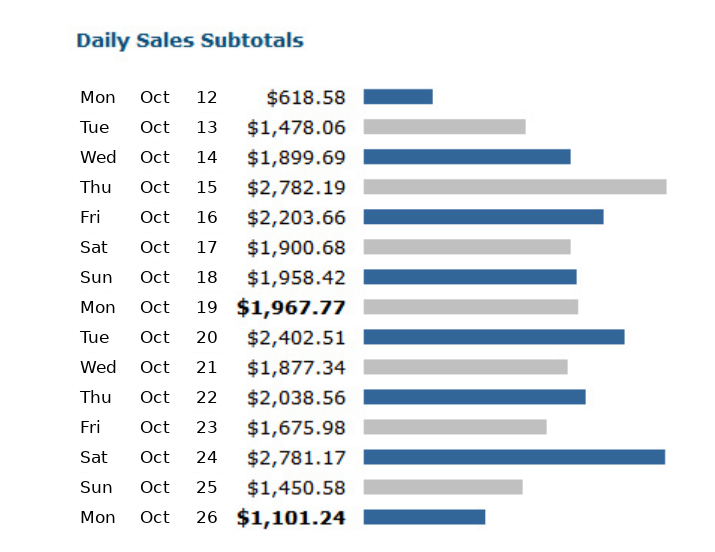
Real income proof from affiliates whose income requires fewer hours than a job — individual results vary by effort, consistency, and market conditions.
The 3 Programs and Their True Hourly Rates
If the goal is an income that produces a high true hourly rate, the program structure determines how many hours the $2,000 requires. These three are the most relevant.
1. GotBackup — The Recurring Rate
GotBackup produces the highest sustained true hourly rate once the recurring base is built. The recurring income arrives every month regardless of how many hours you work that month.
- 200% of the first month's subscription paid immediately
- 25% recurring on every month the customer stays active
- Team component — earn on your referrals' referrals
At roughly 400 active referrals, the recurring stream produces about $2,000 per month. Once that base is built, the hours required to maintain it drop to 5–10 per week — which produces a true rate of $50–$100 per hour for the maintenance work alone.
Protect your data and earn recurring income with GotBackup
2. ListElevate — The Highest Value Per Hour
ListElevate produces the highest per-referral income, which means fewer hours are required to reach $2,000. The included email software also removes hours that most beginners spend on setup.
- 200% commissions on every direct referral
- 25% residual commissions for life on everything your referrals buy
- 25% matching check on your referrals' income — if a referral earns $10,000, you receive $2,500
- No cap on referrals or income
- Email marketing software included — 99% inbox deliverability, 600,000 emails per hour
- $500 Email Marketing Mastery bonus included free
- 30-day money-back guarantee
At a $500 average commission, four referrals produces $2,000. If those four referrals take 60 hours to generate, the true rate is $33 per hour — and it improves as the content library grows and the same content keeps producing referrals.
Start building your list with ListElevate today — 200% commissions + $500 bonus
3. GreatLife Worldwide — The Fast Cash Rate
GreatLife Worldwide produces the highest true rate for immediate cash, because the fast payouts mean the hours invested in month one produce money in month one rather than month three.
- $20 fast-start commission per referred affiliate member
- 50% matching bonus on qualifying matrix commissions
- Product commissions on qualifying orders
- Matrix commissions across multiple levels
- Diamond revenue pool and International Diamond pool (subject to qualification)
- Leadership bonuses and retail sales commissions
- Payouts advertised up to three times per week
At $20 per referral, $2,000 requires 100 referrals. If that takes 80 hours, the true rate is $25 per hour — but unlike the other two programs, the cash arrives within weeks rather than months.
Disclosure: the structure includes a matrix plan with matching bonuses, which places it closer to hybrid network marketing than pure single-tier affiliate marketing — that should be understood before joining.
Join GreatLife Worldwide and start earning $20 fast-start commissions today
The 5 Mistakes People Make Calculating Hourly Rates
- Using gross income instead of net. Tax reduces the figure by 20–40% in most jurisdictions. Use net income for an honest calculation.
- Counting only paid hours. The hidden hours — commute, breaks, email, admin, preparation — often add 30–40% to the total. Excluding them inflates the rate.
- Ignoring unpaid build time. A side hustle in year one can produce a true rate below minimum wage. That is not a failure — it is an investment phase — but the number should be acknowledged.
- Comparing nominal rates across income types. A $11.56 salaried rate and a $11.56 side-hustle rate are not equivalent, because the hidden hours are different.
- Assuming the rate is fixed. Most income types produce a stable or declining true rate. Built affiliate businesses produce a rate that rises dramatically over time.
Avoid all five and you will know what your time is genuinely worth — which is more useful than almost any other financial calculation.
Frequently Asked Questions
How much is $2,000 a month hourly?
At a standard 40-hour week, $2,000 per month equals about $11.56 per hour (based on 173 hours per month). But once you include unpaid breaks, commuting, preparation, and admin, the true rate is usually $7–$9 per hour. The figure depends entirely on which hours you count.
How many hours is $2,000 a month at $15 an hour?
Approximately 133 hours per month, or about 31 hours per week. That is a realistic part-time schedule and a more honest way to think about the figure than assuming a 40-hour week.
Is $2,000 a month a good salary?
It depends on your location and obligations. In a low-cost area with no dependants, $2,000 per month is livable. In a high-cost city, it is not. As a supplement to other income, it is transformative. The hourly rate matters less than what the income actually covers.
What is the real hourly rate of a $2,000 salary?
After tax and hidden hours, a $2,000 gross monthly salary typically works out to $6.50–$9 per hour. That includes unpaid breaks, commuting, preparation, and time spent on work-related tasks outside paid hours. The nominal rate of $11.56 assumes none of that exists.
How do I calculate my true hourly rate?
Use net income (after tax), then count every hour your income requires — paid hours, unpaid breaks, commute, preparation, email outside hours, admin, marketing, and skill development. Divide net income by total hours. Most people find their true rate is 25–40% below the nominal figure.
Why is affiliate income different?
Because a built affiliate business produces income without requiring proportional hours. Once the content and referral base exist, $2,000 per month can require only 15–25 hours per week — producing a true rate of $20–$33 per hour. In year one, however, the true rate is often below minimum wage because you are building assets rather than earning.
How much is $2,000 a month per day?
Approximately $66.67 per day, based on a 30-day month. Over a 5-day working week, that is roughly $92 per working day. Over a 7-day week, it is $66.67. Those figures are only meaningful if you know how many days you actually work.
Conclusion — How Much Is $2,000 a Month Hourly?
So, how much is $2,000 a month hourly? The standard answer is $11.56 at a 40-hour week. The honest answer is usually $7–$9, once unpaid breaks, commuting, preparation, admin, and outside-hours work are counted. And for a built affiliate business, the answer can be $20–$33 per hour — because the hours required to maintain the same income are far fewer.
The calculation matters because the nominal rate is almost always the wrong number. Two people can earn $2,000 per month and one is effectively earning $6.67 per hour while the other earns $28.68 — simply because of how much time the income requires.
The three programs that produce a high true hourly rate are GotBackup (25% recurring income — 400 active referrals produces $2,000 per month with only 5–10 hours of maintenance), ListElevate (200% commissions plus included email software — four referrals at $500 produces the target), and GreatLife Worldwide ($20 fast-start commissions from a $14.95 entry, with the fastest path to immediate cash).
Calculate your true rate before evaluating any income opportunity. The nominal figure is what the offer advertises. The true figure is what your time is actually worth — and it is almost always lower than the number on the contract, unless you have built something that works without you.
Earnings Disclaimer
Results are not guaranteed. The hourly rate calculations, income examples, and comparisons shown in this article are illustrative estimates drawn from typical patterns and individual experiences — they are not precise financial advice and vary by jurisdiction, tax treatment, and individual circumstances. Your results will depend entirely on your own situation, effort, and choices. No income claims or financial advice are made or implied. Affiliate marketing requires real work, patience, and consistency — treat any program as a business, not a lottery ticket.
Affiliate Disclaimer
This article contains affiliate links. If you purchase a product through one of these links, the author may earn a commission at no additional cost to you. These commissions help support the creation of free content like this article. The presence of affiliate links does not influence the recommendations made here — the compensation structures of each program mentioned have been described as accurately as possible, including their matching, team, and matrix components, so readers can make an informed decision.
[Word count: 2,304]
About Barry McKinney

Hi, my name is Barry. I have over 25 years of experience in affiliate marketing and a strong interest in network marketing and MLM. I quit my job 25 years ago and built a business that now generates a consistent five-figure monthly passive income – all from the comfort of my own home. I’m passionate about online business, financial freedom, and helping others discover the opportunities that network marketing can offer.