Leased Ad Space
What Salary Is $100 a Day? The Four-Answer Problem
Published by Barry McKinney — 10-29-2026 04:10:17 PM
$100 a day converts to $36,500 a year if you count calendar days, $26,000 if you count working days, roughly $19,500 if you count net take-home pay, and somewhere near $34,000–$38,000 if you are comparing total compensation including benefits. Those are four different answers to what looks like one question, and the gap between them is over $17,000 a year. Most people default to the biggest number because it sounds best — which is exactly why "make $100 a day" is such a common marketing phrase. Knowing which conversion you are actually being quoted is the difference between a realistic expectation and a disappointment.
Key Takeaways
- $100 a day has four different salary equivalents depending on which conversion you use.
- Calendar days produce $36,500 — the figure marketing usually quotes.
- Working days produce $26,000 — the figure that matches a real job.
- Net take-home produces roughly $19,500 after typical tax.
- To actually net $100 a day, you need a gross salary closer to $34,000–$36,000.

Why One Number Cannot Answer This
This looks like simple arithmetic, and it is — but the arithmetic depends on a decision most people never consciously make: how many days are in a "day"?
If you earn $100 for every calendar day of the year, you work 365 days. Nobody does that. If you earn $100 for every working day, you work roughly 260 days. If you earn $100 net after tax, you need to earn more than $100 gross. Each of those produces a completely different annual salary.
The Four Conversions
| Conversion | Days Counted | Annual Salary |
|---|---|---|
| Calendar days | 365 | $36,500 |
| Working days (5-day week) | 260 | $26,000 |
| Working days after holidays and leave | 230–250 | $23,000–$25,000 |
| Net take-home equivalent | 260 | ~$19,500 net |
| Total compensation including benefits | 260 | ~$31,000–$34,000 |
Read the first and second rows together. The difference between counting calendar days and working days is $10,500 a year — for exactly the same daily rate. That single distinction explains most of the confusion around this question.
Read the fourth row. If you want to actually receive $100 a day after tax, you need to earn more than $100 gross — which pushes the required salary higher, not lower.
Conversion 1 — Calendar Days ($36,500)
This is the simplest and most misleading conversion. $100 × 365 days = $36,500.
When It Is Used
- Marketing for side hustles — "make $100 a day" sounds like a $36,500 income.
- Passive income claims — where the implication is that earnings continue every day.
- Investment and dividend calculations — where income genuinely accrues daily.
Why It Is Usually Wrong
Nobody works 365 days a year, and almost no side hustle produces income on every calendar day. A $100-per-day side hustle that requires active work will produce income on the days you work — not on weekends, holidays, or sick days.
The calendar-day conversion is only accurate for genuinely passive income, such as dividends or recurring commissions from a large established base. For active work, it overstates the annual figure by roughly 40%.
Conversion 2 — Working Days ($26,000)
This is the conversion that matches how a job actually pays. $100 × 260 working days = $26,000.
How the Working Days Are Calculated
| Deduction | Days | Remaining |
|---|---|---|
| Calendar year | 365 | 365 |
| Weekends (2 per week) | −104 | 261 |
| Public holidays | −8 to −12 | 249–253 |
| Paid leave | −10 to −25 | 224–243 |
Read the bottom row. A full-time employee with standard holidays and leave works roughly 224–243 days per year — which at $100 a day produces $22,400–$24,300, not $36,500.
For a freelancer or side hustler who takes unpaid time off, the effective number of working days is often closer to 220–240 — which produces an even lower annual figure.
Why This Is the Honest Conversion
Working days is the conversion that answers the question as most people mean it: "if I earned $100 every day I actually worked, what salary would that be?" The answer is roughly $23,000–$26,000 depending on how much leave you take.
Conversion 3 — Gross vs Net ($19,500–$26,000)
This is where the question becomes genuinely useful, and where most people get it backwards.
The Two Different Questions
| Question | Answer |
|---|---|
| "What salary pays $100 a day gross?" | ~$26,000 |
| "What salary leaves me $100 a day after tax?" | ~$34,000–$36,000 |
Read the two rows carefully. They are asking different things, and the second is far more expensive to achieve. If someone tells you "$100 a day is a $26,000 salary," they are describing gross pay — not what lands in your account.
The Net Calculation
In many jurisdictions, a $26,000 gross salary produces roughly $19,500–$21,000 net after income tax and social contributions — depending heavily on where you live and your personal circumstances.
| Measure | Annual | Per Working Day |
|---|---|---|
| Gross | $26,000 | $100 |
| Net (approx. 22–25% deduction) | $19,500–$20,300 | $75–$78 |
Read the bottom row. A $26,000 salary delivers roughly $75–$78 per working day in your account, not $100. To actually receive $100 per day net, you need a gross salary closer to $34,000–$36,000.
Why This Matters for Side Hustles
Side hustle income is usually received without tax withheld, which creates an illusion. A $100 day feels like $100 in your pocket, but if the income is taxable, the real net figure is closer to $75–$80 depending on your situation.
That does not make the side hustle worse — it makes the comparison with a salary fair. A side hustle producing $100 per working day is roughly equivalent to a $26,000 gross salary, not $36,500.
Conversion 4 — Total Compensation (~$31,000–$34,000)
This is the conversion almost nobody mentions, and it matters when comparing self-employment to employment.
What Employment Includes Beyond Salary
| Component | Typical Value |
|---|---|
| Employer pension contribution | 3–10% of salary |
| Health insurance contribution | Varies widely by country |
| Paid leave | 10–25 days |
| Sick pay | Covered by employer |
| Employer social contributions | 10–25% of salary in many countries |
| Equipment, software, training | Provided |
Read the fifth row. In many countries, the employer pays additional social contributions on top of the salary — which means the true cost of employing someone is meaningfully higher than their gross pay.
A $26,000 salary with typical benefits and employer contributions is equivalent to roughly $31,000–$34,000 in total compensation. That is the number to compare against self-employed income, which carries none of those benefits.
Why Self-Employment Costs More
A self-employed person earning $26,000 has to fund their own pension, insurance, sick leave, equipment, and often both sides of social contributions. In practical terms, $26,000 self-employed is often closer to $20,000–$22,000 in employed-equivalent value.
That comparison is uncomfortable but it is the honest one — and it is why comparing a side hustle's gross revenue to a salary's gross pay overstates the side hustle.
The Full Comparison
| Conversion | Annual Figure | What It Describes |
|---|---|---|
| Calendar days, gross | $36,500 | Marketing claim — 365 paid days |
| Working days, gross | $26,000 | Realistic job-equivalent gross salary |
| Working days, net | ~$19,500–$20,300 | What actually reaches your account |
| Total compensation (employed) | ~$31,000–$34,000 | Salary plus benefits and contributions |
| Self-employed equivalent | ~$20,000–$22,000 | After funding your own benefits |
Read the first and third rows together. The difference between the marketing claim and the net reality is over $17,000 a year — from the same $100 daily rate. That gap is not a rounding error; it is the difference between a comfortable side income and a modest one.
The Reverse Math: What Salary Produces $100 a Day Net?
If your actual goal is to receive $100 a day, the calculation runs the other direction. You need to gross more than $100 a day to net $100 a day.
The Calculation
| Target Net Per Day | Net Annual | Gross Needed (approx.) |
|---|---|---|
| $50 | $13,000 | ~$16,500–$17,500 |
| $75 | $19,500 | ~$25,000–$26,000 |
| $100 | $26,000 | ~$34,000–$36,000 |
| $150 | $39,000 | ~$51,000–$54,000 |
Read the third row. To net $100 per working day, you need a gross salary of roughly $34,000–$36,000 — not $26,000. Those figures assume a typical deduction rate of 22–28%, which varies significantly by country and personal circumstances.
That is the honest reverse math. When someone says they want to "make $100 a day," the question worth asking is whether they mean gross or net — because the required income differs by around $10,000 a year.
The Hourly Equivalent
Most people also want to know what $100 a day means per hour. That depends entirely on how many hours the day contains.
| Hours Per Day | Hourly Rate for $100 |
|---|---|
| 8 hours | $12.50 |
| 6 hours | $16.67 |
| 4 hours | $25.00 |
| 2 hours | $50.00 |
| 1 hour | $100.00 |
Read the first row. At a standard eight-hour day, $100 per day is $12.50 per hour — which is below or near minimum wage in many developed countries. Read the fourth row. At two hours per day, the same $100 is $50 per hour, which is a genuinely strong rate.
That comparison is why "make $100 a day" can describe either a poorly paid job or an excellent side hustle. The figure alone tells you nothing without the hours attached to it.
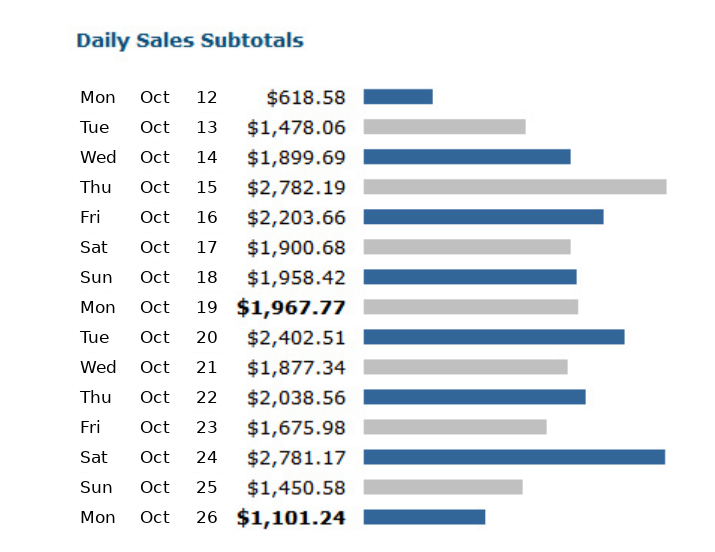
Real income proof from affiliates earning around $100 per day — individual results vary by effort, consistency, and market conditions.
What $100 a Day Actually Buys
Once the conversion is clear, the practical question becomes whether the figure is meaningful. It depends entirely on the cost of living where you are.
In Different Contexts
| Context | What $100/Day Represents |
|---|---|
| Low-cost country | A comfortable full-time income |
| Mid-cost area, single person | A livable income with discipline |
| High-cost city | Below the cost of rent and essentials |
| As a supplement to a salary | Transformative — covers housing or savings |
| As sole income with dependants | Insufficient in most developed countries |
Read the last two rows. That distinction matters more than the salary conversion itself. $100 a day as an extra income stream changes a household budget. $100 a day as the only income for a family does not cover essentials in most developed economies.
How to Actually Build $100 a Day
If the goal is a real $100 per day from home — not a marketing figure — the most reliable route is three moderate streams rather than one large one.
The Three-Stream Configuration
| Stream | Monthly | Daily |
|---|---|---|
| Recurring income | $1,000 | ~$33 |
| High-ticket commissions | $1,200 | ~$40 |
| Fast-start / matching | $800 | ~$27 |
| Total | $3,000 | ~$100 |
Read the total row. That is $3,000 per month — roughly $100 per calendar day, or $150 per working day if you count 20 working days per month. The distinction matters again: the same $3,000 is either $100 or $150 per day depending on the denominator.
1. GotBackup — The Recurring Stream
GotBackup produces the most stable stream of the three. Cloud backup is something nobody cancels, so the recurring commissions continue month after month.
- 200% of the first month's subscription paid immediately
- 25% recurring on every month the customer stays active
- Team component — earn on your referrals' referrals
At roughly 200 active referrals, the recurring stream produces about $1,000 per month — one third of the $3,000 target.
Protect your data and earn recurring income with GotBackup
2. ListElevate — The High-Ticket Stream
ListElevate produces the largest per-sale income, which means fewer transactions are needed to reach the target.
- 200% commissions on every direct referral
- 25% residual commissions for life on everything your referrals buy
- 25% matching check on your referrals' income — if a referral earns $10,000, you receive $2,500
- No cap on referrals or income
- Email marketing software included — 99% inbox deliverability, 600,000 emails per hour
- $500 Email Marketing Mastery bonus included free
- 30-day money-back guarantee
At a $500 average commission, roughly 2–3 sales per month produces $1,200 — the second stream.
Start building your list with ListElevate today — 200% commissions + $500 bonus
3. GreatLife Worldwide — The Momentum Stream
GreatLife Worldwide supplies the fast cash flow that keeps the plan alive during the early months.
- $20 fast-start commission per referred affiliate member
- 50% matching bonus on qualifying matrix commissions
- Product commissions on qualifying orders
- Matrix commissions across multiple levels
- Diamond revenue pool and International Diamond pool (subject to qualification)
- Leadership bonuses and retail sales commissions
- Payouts advertised up to three times per week
Forty referrals at $20 each produces $800 — the third stream. Disclosure: the structure includes a matrix plan with matching bonuses, which places it closer to hybrid network marketing than pure single-tier affiliate marketing. That should be understood before joining.
Join GreatLife Worldwide and start earning $20 fast-start commissions today
The 5 Mistakes People Make With This Conversion
- Using calendar days for active income. Multiplying a daily rate by 365 overstates the annual figure by around 40% for any income that requires you to work.
- Confusing gross with net. A $26,000 salary does not deliver $100 per day in your account — it delivers roughly $75–$78 after typical deductions.
- Ignoring the benefits gap. A salary includes pension contributions, insurance, and paid leave. Self-employed income does not, which makes the employed figure worth 20–30% more.
- Forgetting the hours. $100 per day at eight hours is $12.50 per hour; at two hours it is $50 per hour. The daily figure alone says nothing about whether the rate is good.
- Comparing a side hustle's gross revenue to a salary's gross pay. The side hustle has to fund its own tools, taxes, and time off — which reduces the equivalent figure by 20–25%.
Avoid all five and the conversion becomes a useful planning tool rather than a marketing slogan.
Frequently Asked Questions
What salary is $100 a day?
It depends on the conversion. Counting calendar days, $100 a day is $36,500 a year. Counting working days (roughly 260), it is $26,000. Counting net take-home after typical tax, $26,000 gross delivers roughly $19,500–$20,300 — or about $75–$78 per working day. To actually net $100 per working day, you need a gross salary closer to $34,000–$36,000.
How much is $100 a day per year?
$36,500 if you multiply by 365 calendar days. $26,000 if you multiply by 260 working days. $23,000–$25,000 if you account for public holidays and paid leave. The working-day figure is the one that matches how a job actually pays.
How much is $100 a day per hour?
It depends entirely on how many hours you work. At eight hours per day, $100 is $12.50 per hour. At six hours, $16.67. At four hours, $25. At two hours, $50. At one hour, $100. The daily figure alone does not tell you whether the hourly rate is good.
Is $100 a day a good salary?
It depends on your location, household size, and whether it is your only income. In a low-cost area with no dependants, $100 a day is livable. In a high-cost city with a family, it is not. As a supplement to an existing income, it is transformative.
How much do I need to earn to take home $100 a day?
Roughly $34,000–$36,000 gross per year, assuming a typical deduction rate of 22–28%. That works out to about $130–$140 per working day before tax, so that $100 remains after deductions. The exact figure varies significantly by country and personal circumstances.
Why do side hustle claims use the $36,500 figure?
Because multiplying by 365 produces the largest number. It is technically accurate only for genuinely passive income that accrues every day. For any side hustle requiring active work, the working-day figure of $26,000 is the honest equivalent — and the net figure is lower still.
How can I actually earn $100 a day from home?
The most reliable route is three moderate streams rather than one large one: recurring income through GotBackup (about 200 active referrals produces $1,000 per month), high-ticket commissions through ListElevate (about 2–3 sales per month at $500 produces $1,200), and fast-start referrals through GreatLife Worldwide (40 referrals at $20 produces $800). Together they produce $3,000 per month.
Conclusion — What Salary Is $100 a Day?
So, what salary is $100 a day? There are four honest answers. Counting calendar days, it is $36,500 — the figure marketing prefers. Counting working days, it is $26,000 — the figure that matches a real job. Counting net take-home, it is roughly $19,500 — what actually reaches your account. And to genuinely net $100 per working day, you need a gross salary closer to $34,000–$36,000.
The gap between the first and third answers is over $17,000 a year, from exactly the same daily rate. That gap is not an accounting quirk — it is the difference between a marketing claim and a financial reality, and knowing which one you are being quoted is the entire skill.
If the goal is a real $100 per day from home, the reliable route is three moderate streams: GotBackup (25% recurring income, roughly 200 active referrals produces $1,000 per month), ListElevate (200% commissions, roughly 2–3 sales per month produces $1,200), and GreatLife Worldwide ($20 fast-start commissions, 40 referrals produces $800). Together they produce $3,000 per month.
And when you see a "$100 a day" claim — from any source — ask two questions before believing the annual figure: does it count working days or calendar days, and is that gross or net? Those two questions will tell you more than any headline number.
Earnings Disclaimer
Results are not guaranteed. The salary conversions, tax estimates, and income examples shown in this article are illustrative and vary significantly by country, personal circumstances, and program terms — they are not financial or tax advice and are not promises of future earnings. Your results will depend entirely on your own situation, effort, and the program you choose. No income claims are made or implied. Consult a qualified professional for advice specific to your circumstances. Affiliate marketing requires real work, patience, and consistency — treat any program as a business, not a lottery ticket.
Affiliate Disclaimer
This article contains affiliate links. If you purchase a product through one of these links, the author may earn a commission at no additional cost to you. These commissions help support the creation of free content like this article. The presence of affiliate links does not influence the recommendations made here — the compensation structures of each program mentioned have been described as accurately as possible, including their matching, team, and matrix components, so readers can make an informed decision.
About Barry McKinney

Hi, my name is Barry. I have over 25 years of experience in affiliate marketing and a strong interest in network marketing and MLM. I quit my job 25 years ago and built a business that now generates a consistent five-figure monthly passive income – all from the comfort of my own home. I’m passionate about online business, financial freedom, and helping others discover the opportunities that network marketing can offer.