Leased Ad Space
How to Realistically Make $1,000 a Day? The Honest Ceiling Test
Published by Barry McKinney — 10-29-2026 05:10:26 PM
Making $1,000 a day means earning $30,000 a month — roughly $365,000 a year — which places it in the top fraction of a percent of earners worldwide and makes it structurally impossible for a solo operator working normal hours. That is not pessimism; it is arithmetic. A single person working 4 hours a day has about 120 hours a month available, which means $30,000 requires an effective rate of $250 per hour sustained every month. Nobody sustains that. Reaching $1,000 a day realistically requires multiple independent systems, paid traffic or a team, capital reinvestment, and a timeline measured in years rather than months. This article explains the ceiling, the four requirements, the realistic timeline, and — importantly — how to audit any "$1K/day" claim before you believe it.
Key Takeaways
- $1,000 a day = $30,000 a month = ~$365,000 a year — top fraction of a percent income.
- Solo work caps around $10,000–$15,000 per month, even at full-time hours.
- Reaching $30,000 requires multiple independent systems plus capital or a team.
- The realistic timeline is 24–48 months, not 90 days.
- Most "$1,000/day" claims come from course sellers, not operators — audit them before believing them.

What $1,000 a Day Actually Means
Before anything else, the honest framing. $1,000 per day is:
- $7,000 per week
- $30,000 per month
- ~$365,000 per year
That is not a "good side income" or a "replacement salary." It is a top-tier income in every country on earth. In most developed nations it places the earner in the top 1%, and in many it places them considerably higher.
That does not make it impossible. People do earn $30,000 per month from home businesses. But the honest framing matters, because it determines what kind of business has to exist to produce it.
Where $1,000 a Day Sits
| Target | Monthly | What It Represents | Timeline |
|---|---|---|---|
| $100/day | $3,000 | Meaningful supplement | 3–12 months |
| $250/day | $7,500 | Replacement-plus income | 12–24 months |
| $500/day | $15,000 | Top-tier income | 18–36 months |
| $1,000/day | $30,000 | Top fraction of 1% | 24–48 months |
| $2,000/day | $60,000 | Exceptional business income | 36–60+ months |
Read the fourth row. The timeline is the part almost no "$1K/day" content mentions. Two to four years of consistent, structured work is the honest expectation — and even that assumes the business is built correctly.
The "Realistically" Problem: Why This Question Exists
The word "realistically" in this question is doing something important. It usually means one of three things.
What the Word Signals
| What It Signals | What It Implies |
|---|---|
| "I've seen the claims and don't believe them" | Skepticism based on experience |
| "I want the honest version" | Ready for real numbers |
| "I've tried things that didn't work" | Prior attempts without results |
All three are reasonable. And all three deserve the same thing: not a motivational answer, but a structural one — what the number actually requires, and how to tell whether any particular claim is real.
Why So Many Claims Exist
There is a market for "$1,000/day" claims because the number sells. Courses, coaching programmes, and affiliate offers all benefit from the perception that the number is reachable quickly. That does not make every claim fraudulent — but it does mean most of them are marketing, not data.
The audit checklist later in this article will help you tell the difference. First, the honest structure.
The Honest Ceiling Test
This is the core insight of the article. A solo operator — one person working from home — has a hard ceiling. Knowing it clarifies what kind of business $30,000 per month actually requires.
The Solo Ceiling
| Hours Per Day | Realistic Monthly Ceiling | Why It Caps |
|---|---|---|
| 2 hours | $3,000–$4,000 | Output volume too low |
| 4 hours | $6,000–$9,000 | Content and engagement consume time |
| 6 hours | $8,000–$12,000 | Approaching burnout |
| 8+ hours | $10,000–$15,000 | Sustainable only briefly |
Read the bottom row. Even working full-time hours, a single person running a single system caps out around $10,000–$15,000 per month. That is an excellent income — and it is roughly a third to a half of the $30,000 target.
That gap is the honest ceiling test. $30,000 per month cannot be produced by a solo operator working normal hours on one system. It requires something structurally different.
The Effective Rate Requirement
| Hours Per Day | Rate Needed for $30,000/Month | Sustainable? |
|---|---|---|
| 2 hours | $500/hour | No |
| 4 hours | $250/hour | No |
| 6 hours | $167/hour | Only for specialists |
| 8 hours | $125/hour | Barely — and unsustainable |
| 12 hours | $83/hour | Physically impossible to sustain |
Read the second row. At 4 hours per day, $30,000 per month requires an effective rate of $250 per hour — sustained every month. That is roughly what a senior consultant or top-tier freelancer earns, and they do not earn it from a home side business.
That table explains why "$1,000 a day in 2 hours" claims are almost always false. The arithmetic does not work, regardless of method.
The Four Requirements at $30,000/Month
If solo work caps at $10,000–$15,000 per month, then $30,000 requires four specific things. None is optional.
Requirement 1 — Multiple Independent Systems
One system producing $30,000 per month is fragile and requires an extraordinary scale of a single activity. Three or four systems each producing $7,000–$10,000 is more realistic and more resilient.
| Systems | Each Producing | Total | Realistic? |
|---|---|---|---|
| 1 | $30,000 | $30,000 | Requires exceptional scale |
| 2 | $15,000 | $30,000 | Difficult |
| 3 | $10,000 | $30,000 | Realistic |
| 4 | $7,500 | $30,000 | Realistic, more complex |
Read the third row. Three systems each producing $10,000 per month is the most common structure for businesses at this level. Each system is achievable on its own — the difficulty is building and maintaining all three simultaneously.
Requirement 2 — Operating Without You
At $10,000 per month, you can be present every day. At $30,000 per month, you cannot. The business must produce income on the days you are sick, travelling, or simply not working.
| Function | Manual (Caps Around $12K) | Systemised (Scales) |
|---|---|---|
| Content | You write everything | Evergreen library or outsourced |
| You send each one | Automated sequences | |
| Traffic | You post daily | Ads or evergreen content |
| Support | You answer every question | FAQ, knowledge base, or team |
| Referrals | You chase each one | Documented process or automated |
Read the right column. Every function needs to operate with minimal personal involvement for the business to sustain $30,000 per month. Any function that requires you daily becomes the bottleneck that caps everything else.
Requirement 3 — Paid Traffic or a Team
This is the requirement most people avoid, and it is usually the one that determines whether $30,000 is reachable.
| Leverage Type | What It Does | Capital Required |
|---|---|---|
| Paid traffic | Replaces content hours with capital | $2,000–$10,000+/month |
| Team member (content) | Multiplies content output | $1,500–$4,000/month |
| Team member (ads) | Manages traffic and funnels | $2,000–$5,000/month |
| Virtual assistant | Handles admin and engagement | $500–$1,500/month |
Read the first row. Paid traffic is the fastest form of leverage — it converts capital into reach without requiring more content. But it only works once a funnel already converts organically.
Read the second and third rows. A small team of one or two people — usually a content producer and an ads manager — is the other common route. Either works; most businesses at this level use some combination.
Requirement 4 — Capital Reinvestment
Businesses at $30,000 per month do not spend the whole $30,000. They reinvest a meaningful portion into traffic, tools, and team — because that reinvestment is what maintains the income.
| Monthly Income | Reinvest | What It Buys |
|---|---|---|
| $10,000 | 20–30% ($2,000–$3,000) | Tools, some content, ad testing |
| $20,000 | 25–35% ($5,000–$7,000) | Part-time team, ad scale |
| $30,000 | 30–40% ($9,000–$12,000) | Team, paid traffic, systems |
Read the bottom row. At $30,000 per month, roughly $9,000–$12,000 goes back into the business. That reinvestment is what keeps the systems running — without it, the income declines as competitors out-spend and out-publish you.
What $30,000/Month Actually Looks Like
Here is a realistic configuration for $30,000 per month. Each stream is meaningful but not extreme, and together they produce the target.
| Stream | Monthly | What It Requires |
|---|---|---|
| Recurring income | $10,000 | ~2,000 active referrals at 25% |
| High-ticket commissions | $10,000 | 10–20 sales/month at $500–$1,000 |
| Paid traffic / team output | $7,000 | Funnel + $3,000–$5,000 ad spend |
| Matching / team income | $3,000 | Active referral network |
| Total | $30,000 |
Read across. No single stream carries the whole target. Each contributes a piece, and each requires its own system — which is why this level takes years to build rather than months.
Read the third row carefully. That is the requirement most people skip. Paid traffic or team output is not optional at this level — it is the mechanism that replaces the hours you no longer have.
The Realistic 24–48 Month Timeline
Here is what the honest journey looks like. These are ranges, not promises, and the first six months produce very little.
| Period | Monthly Income | What Is Happening |
|---|---|---|
| Month 1–3 | $0–$1,000 | Setup, first content, first referrals |
| Month 4–6 | $500–$2,500 | First stream producing |
| Month 7–12 | $1,500–$6,000 | Second stream, recurring base building |
| Year 2 | $5,000–$15,000 | Three streams, first leverage added |
| Year 3 | $12,000–$25,000 | Team or paid traffic scaling |
| Year 4–5 | $20,000–$40,000+ | $30,000 per month in reach |
Read the last row. $30,000 per month is reached in year four or five for most people who get there — not in 90 days, not in year one, and not without a team or paid traffic.
Read the first row. Months one to three produce almost nothing — and that is exactly where most people quit, before the structure even exists.
The Claim Audit: How to Spot a Fake "$1K/Day" Promise
Since most of what you will find on this topic is marketing rather than data, here is the audit checklist. Run it on any claim before believing it.
The Seven Audit Questions
| Question | Red Flag Answer |
|---|---|
| Is the claim from someone selling a course or coaching? | Yes — their income may be from selling the method, not using it |
| Is the income verified or self-reported? | Self-reported, no evidence |
| How long did it take? | Vague, or claimed as "90 days" |
| How many hours per day? | Claimed "1–2 hours" for $30K/month |
| Is a team or ad spend mentioned? | No — implies solo work at full scale |
| Are losses or failed months mentioned? | No — only the success shown |
| Is the income sustained or a single month? | One good month presented as a run-rate |
Read the first row. That is the most important one. Someone teaching a $1,000/day method may be earning from the teaching, not the method. That does not make the teaching fraudulent — but it does mean the income proof may be from the wrong source.
Read the last row. A single $30,000 month is not $1,000 per day. It is one good month. $1,000 per day as a run-rate requires twelve consecutive months averaging $30,000 — which is a very different claim.
What a Credible Claim Looks Like
- States the timeline honestly — "took three years" rather than "took 90 days."
- Acknowledges team and ad spend — because businesses at this level have both.
- Shows the revenue trend — not one screenshot from one month.
- Distinguishes gross from net — $30,000 gross is not $30,000 profit.
- Mentions what failed — every business at this level has losses to report.
- Does not require a purchase to hear it — the honest version is usually free.
Read the fourth item. That distinction is critical. A business producing $30,000 gross with $12,000 reinvested and $5,000 in other costs nets $13,000 — which is a good income, but not the $365,000 the headline implies.
The 3 Programs and Their Honest Role
Here is each program's role in a $30,000-per-month configuration, with the structure disclosed plainly.
1. GotBackup — The Recurring Foundation
GotBackup supplies the recurring base that makes $30,000 stable rather than spiky. At this level, stability is what allows the business to operate without constant new sales.
- 200% of the first month's subscription paid immediately
- 25% recurring on every month the customer stays active
- Team component — earn on your referrals' referrals
At roughly 2,000 active referrals, the recurring stream alone produces about $10,000 per month — one third of the target. Because cloud backup retention is exceptionally high, that base does not erode the way most recurring products do.
Protect your data and earn recurring income with GotBackup
2. ListElevate — The High-Value Engine
ListElevate supplies the largest per-sale contribution and the audience automation that reduces the content hours required.
- 200% commissions on every direct referral
- 25% residual commissions for life on everything your referrals buy
- 25% matching check on your referrals' income — if a referral earns $10,000, you receive $2,500
- No cap on referrals or income
- Email marketing software included — 99% inbox deliverability, 600,000 emails per hour
- $500 Email Marketing Mastery bonus included free
- 30-day money-back guarantee
At a $1,000 average commission, roughly 10 sales per month produces $10,000. The 25% matching check is where this program scales beyond what direct selling alone can produce — as your referrals build their own income, you receive a quarter of it without proportional hours.
Start building your list with ListElevate today — 200% commissions + $500 bonus
3. GreatLife Worldwide — The Cash Flow and Matching Engine
GreatLife Worldwide supplies fast early cash and matching income as a network grows. It should be disclosed honestly: its structure includes a matrix compensation plan with matching bonuses, which places it closer to hybrid network marketing than pure single-tier affiliate marketing.
- $20 fast-start commission per referred affiliate member
- 50% matching bonus on qualifying matrix commissions
- Product commissions on qualifying orders
- Matrix commissions across multiple levels
- Diamond revenue pool and International Diamond pool (subject to qualification)
- Leadership bonuses and retail sales commissions
- Payouts advertised up to three times per week
The 50% matching bonus is the strongest matching mechanism of the three programs, and at this level of income it can contribute $3,000 or more per month as your network grows.
Join GreatLife Worldwide and start earning $20 fast-start commissions today
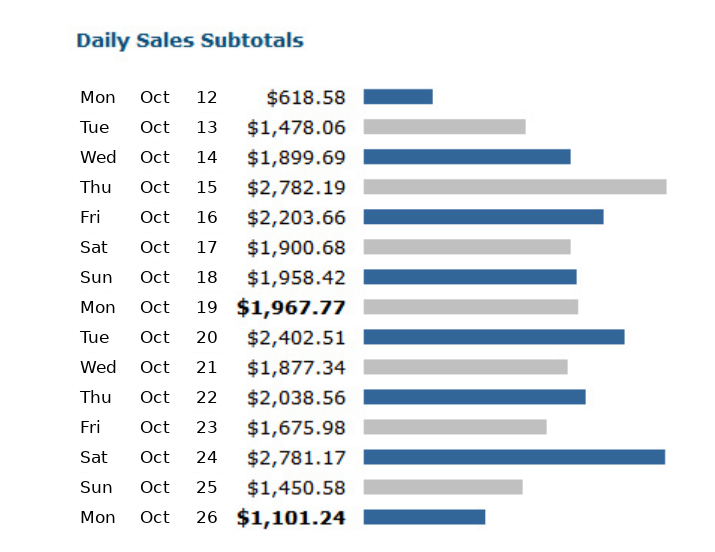
Real income proof from affiliates who built income over multiple years — individual results vary by effort, consistency, and market conditions.
What to Do If You Want to Start Today
$1,000 a day is not a starting target. It is a destination. Here is what starting actually looks like if you want to eventually get there.
The Realistic Sequence
| Phase | Focus | Timeline |
|---|---|---|
| Phase 1 | Build the first stream to $1,000/month | Month 1–6 |
| Phase 2 | Add the second stream to $3,000/month total | Month 7–12 |
| Phase 3 | Add the third stream and recurring base to $10,000/month | Year 2 |
| Phase 4 | Add paid traffic or a team, scale to $20,000/month | Year 3 |
| Phase 5 | Multiple systems operating, reach $30,000/month | Year 4–5 |
Read the first row. The first target is $1,000 per month — not per day. That is the correct starting point, and it takes most people six months to reach it.
Read the last row. $30,000 per month arrives in year four or five for those who get there. That is the honest timeline, and it is the reason the "$1,000/day in 90 days" claims are so damaging — they set a timeline that guarantees quitting.
The 5 Mistakes People Make Chasing $1,000 a Day
- Setting the target too high, too soon. $1,000 a day is not a starting point. The first milestone is $1,000 a month, and reaching that is a genuine achievement.
- Believing a claim without auditing it. Run the seven audit questions on any "$1K/day" promise before committing time or money to it.
- Trying to do it solo. Solo work caps at roughly $10,000–$15,000 per month. Reaching $30,000 requires paid traffic or a team.
- Never reinvesting. Businesses at this level reinvest 30–40% of income. Spending the whole amount causes the income to erode as competitors out-spend you.
- Quitting in month two. The first 60–90 days produce almost nothing at any income target. The people who reach $30,000 per month are the ones still working in year three.
Avoid all five and the target becomes a multi-year plan rather than a fantasy.
Frequently Asked Questions
How to realistically make $1,000 a day?
Realistically, $1,000 a day requires three to four independent income systems each producing $7,000–$10,000 per month, plus paid traffic or a team, plus 30–40% reinvestment of income. The timeline is 24–48 months. Solo work caps around $10,000–$15,000 per month even at full-time hours, so reaching $30,000 requires structural leverage, not more effort.
Is $1,000 a day actually possible?
Yes, for a small number of people with established multi-system businesses. It is not possible in 90 days, and it is not possible from 1–2 hours per day of solo work. The arithmetic does not support those claims. $1,000 a day equals $30,000 per month, which places the earner in the top fraction of a percent of income earners.
How long does it take to make $1,000 a day?
For most people who reach it, 24–48 months of consistent structured work. Some move faster with existing audiences, capital, or a team. The first six months typically produce $0–$1,000 per month, and $30,000 per month usually appears in year four or five.
Can one person make $1,000 a day alone?
Extremely rarely. A single person working full-time hours on a single system typically caps around $10,000–$15,000 per month. Reaching $30,000 requires either paid traffic (capital replacing hours) or a small team (other people's hours). The solo ceiling is real.
Why do so many people claim $1,000 a day?
Because the number sells courses, coaching, and affiliate offers. Many of the people making those claims earn from teaching the method rather than using it, or present one good month as a run-rate. The seven-question audit in this article helps distinguish real claims from marketing.
What is the fastest realistic path to $30,000 per month?
The fastest path involves a high-ticket affiliate system plus paid traffic once a funnel converts, combined with a recurring base. Programmes like ListElevate (200% commissions), GotBackup (25% recurring), and GreatLife Worldwide ($20 per referral plus 50% matching) can each contribute, but none reaches $30,000 without multiple systems and leverage.
Should I even try for $1,000 a day?
Yes, if you treat it as a multi-year destination rather than an immediate target. The more useful first goal is $1,000 per month — which is achievable within six months for most committed people and is the first step on the path to $30,000 per month.
Conclusion — How to Realistically Make $1,000 a Day?
So, how do you realistically make $1,000 a day? You accept that the honest answer is uncomfortable: $30,000 per month is a top-tier income that requires multiple systems, paid traffic or a team, consistent reinvestment, and years of work. It cannot be produced by one person working a few hours a day on one system — the arithmetic does not allow it.
The honest ceiling test is the key insight. Solo work caps around $10,000–$15,000 per month. $30,000 requires something structurally different: three or four systems, at least one leverage mechanism (paid traffic or a team), and 30–40% reinvestment of income into maintaining those systems.
The realistic timeline is 24–48 months, with $30,000 per month typically appearing in year four or five. The first six months produce $0–$1,000 per month — and that is where most people quit, long before the structure exists.
If you want to start building toward it, the three programs that can each contribute a stream are GotBackup (25% recurring income — about 2,000 active referrals produces $10,000 per month), ListElevate (200% commissions plus a 25% matching check and included email software), and GreatLife Worldwide ($20 fast-start commissions with 50% matching bonuses — though its matrix structure should be understood before joining).
Start with $1,000 per month. Then $3,000. Then $10,000. And audit every claim you read along the way with the seven questions in this article — because the honest version of this number is slow, structural, and real, while the version sold online is fast, simple, and almost never true.
Earnings Disclaimer
Results are not guaranteed. The income examples, timelines, and comparison figures shown in this article are illustrative estimates drawn from individual experiences and public program information — they are not promises of future earnings. Reaching $30,000 per month is not typical, and the large majority of people who start affiliate marketing never come close to it. Your results will depend entirely on your own effort, skills, capital available for reinvestment, market conditions, and the program you choose. No income claims are made or implied. Affiliate marketing requires real work, patience, capital, and consistency — treat any program as a business, not a lottery ticket.
Affiliate Disclaimer
This article contains affiliate links. If you purchase a product through one of these links, the author may earn a commission at no additional cost to you. These commissions help support the creation of free content like this article. The presence of affiliate links does not influence the recommendations made here — the compensation structures of each program mentioned have been described as accurately as possible, including their matching, team, and matrix components, so readers can make an informed decision.
About Barry McKinney

Hi, my name is Barry. I have over 25 years of experience in affiliate marketing and a strong interest in network marketing and MLM. I quit my job 25 years ago and built a business that now generates a consistent five-figure monthly passive income – all from the comfort of my own home. I’m passionate about online business, financial freedom, and helping others discover the opportunities that network marketing can offer.