Leased Ad Space
How Can I Actually Make Money on the Side? The "Actually" Problem
Published by Barry McKinney — 10-29-2026 05:10:37 PM
The word "actually" is the most important word in this question — it signals that you have already tried something and it did not work, and what you need is not another idea but an explanation of why the last attempt failed. Most side hustle attempts do not fail dramatically. They fail silently: the posts stop, the account goes quiet, the folder of unfinished work sits there, and nobody notices — including the person who started. Understanding the five silent failure modes, and building a minimum viable side hustle that survives contact with a real schedule, is what separates an attempt from an income.
Key Takeaways
- "Actually" means a previous attempt failed — diagnose the failure before starting another.
- Side hustles fail silently — through drift, not through a dramatic collapse.
- Five failure modes account for almost every abandoned attempt.
- The fix is a Minimum Viable Side Hustle that survives a real, messy schedule.
- The honest adjustment is usually lower target, longer duration — not more effort.

Why "Actually" Is the Operative Word
When someone asks "how do I make money on the side," they want ideas. When someone asks "how do I actually make money on the side," they are telling you something different — that the ideas were not the problem.
What the Word Tells You
| What "Actually" Usually Means | What It Implies for the Answer |
|---|---|
| "I started something and stopped" | Diagnose the stopping, not the starting |
| "I tried three things and none worked" | Look for a pattern across attempts |
| "I can't tell if it's working" | Missing a feedback loop |
| "I don't have time for this" | Design for a smaller time budget |
| "I've read a lot but earned nothing" | Consumption substituting for output |
Read the first and second rows together. Those two account for most of the traffic behind this question. The person does not need a new method — they need to understand why the previous method ended, because the same pattern will repeat regardless of which method they choose next.
The Uncomfortable Finding
Across almost every abandoned side hustle, the same observation holds: the person did not decide to quit. There was no moment of choosing to stop. The activity simply tapered, one skipped day became two, and two became a month. By the time the person reflects on it, the attempt is already over.
That is what makes these failures silent. They do not announce themselves. They are not dramatic enough to fix in the moment. And they are invisible to everyone except the person who keeps noticing the tab is still open but nothing is happening.
The Five Silent Failure Modes
Here are the five ways a side hustle quietly ends. Almost every abandoned attempt matches at least two of them.
Failure Mode 1 — The Target Was Never a Number
The attempt began with a feeling — "I want extra money" — rather than a figure. Without a number, there is no way to know whether progress is happening, and no way to notice when it is not.
| Vague Target | Concrete Target |
|---|---|
| "Make extra money" | "$300 per month by month four" |
| "Build something" | "Publish 40 posts in 60 days" |
| "Get an audience" | "100 email subscribers by week eight" |
Read the right column. Every one of those is measurable and dated. The left column is a mood. Side hustles built on moods drift; side hustles built on numbers have a way to detect drift early.
Failure Mode 2 — No Feedback Loop
Many side hustles produce no visible signal for weeks. The person publishes content, sees nothing happen, and has no idea whether that means the content is bad, the audience is wrong, or the timeline is simply too early.
Without feedback, the brain interprets silence as failure — and stops. That is not a character flaw; it is how humans respond to ambiguous effort.
Failure Mode 3 — The Unit Value Was Wrong
A side hustle paying $5 per sale requires hundreds of sales to reach anything meaningful. The person puts in real effort, produces a handful of sales, earns $40, and concludes that side hustles do not work.
The problem was not effort. It was the arithmetic. Low unit values require volume the person cannot produce alongside a job — so the attempt was structurally doomed regardless of consistency.
Failure Mode 4 — No Re-Entry Point
Life interrupts. A child gets sick, a work deadline hits, a holiday arrives. The person misses ten days. When they return, they have lost the thread — they do not know what they were working on, what had been published, or what came next.
Side hustles that require holding state in your head are fragile. Side hustles with a written next action survive interruption, because re-entry takes five minutes instead of an hour of re-orientation.
Failure Mode 5 — It Required Peak Energy
The attempt was designed for the person's best version — the version with energy after work, no social obligations, and a clear head. That version shows up maybe twice a week. The attempt collapses on the other five days.
| Peak-Energy Design | Sustainable Design |
|---|---|
| Write a 1,500-word article | Publish one short post |
| Record and edit a video | Write three lines of text |
| Do a full research session | Answer one question |
| Build the whole funnel | Set up one page |
Read the right column. Every item takes under fifteen minutes. That is not because ambitious work is bad — it is because the version of the work that happens on a bad day is the version that determines whether the side hustle continues.
The Difference Between Starting and Sustaining
This is the distinction the entire question turns on. Starting is easy and almost everyone does it. Sustaining is what produces income, and almost nobody designs for it.
Starting vs Sustaining
| Factor | Starting | Sustaining |
|---|---|---|
| Energy required | High — motivation is fresh | Low — must run on habit |
| Time required | Blocks | Fragments |
| Duration | Days | Months |
| What it needs | Excitement | Re-entry points |
| Who succeeds | Almost everyone | People who designed for bad days |
Read the last row. That is the whole insight. The people who actually make side income are not the ones who started most enthusiastically. They are the ones whose setup could survive a terrible week.
What Sustainable Actually Looks Like
A sustainable side hustle on a real schedule typically looks like 20–45 minutes per day, in a slot that already exists — the commute, the lunch break, the hour after the house goes quiet. It is not a separate project bolted onto the day. It fits inside the day that already exists.
That is why so many side hustle plans fail: they are designed as a new block of time in a schedule that had no room. The fix is not finding more time. It is attaching the work to time that is already there.
The Minimum Viable Side Hustle
Here is the practical framework. A Minimum Viable Side Hustle (MVSH) is the smallest version of the work that still produces income and can run on a bad day.
The Five MVSH Criteria
| Criterion | What It Means |
|---|---|
| Under 30 minutes | The daily action fits a bad day |
| Under $20 to start | No meaningful financial risk |
| One next action | Re-entry takes seconds, not minutes |
| Weekly feedback | Something measurable happens every seven days |
| High unit value | Few transactions reach a meaningful amount |
Read the third row. That is the one most people miss. If the side hustle requires remembering what you were doing, it will die on the first interruption. If there is one written next action, it survives.
The Four MVSH Profiles
Different situations need different minimum viable versions. Here are four that fit real constraints.
Profile A — The Fragmented-Time Builder
| Element | Design |
|---|---|
| Daily action | Publish one short piece of content |
| Time required | 15–25 minutes |
| Weekly feedback | Clicks and referrals recorded in a spreadsheet |
| Unit value | $20–$500 per referral, depending on program |
| Survives interruption? | Yes — next action is always "publish one thing" |
This is the most common profile. It suits parents, shift workers, and anyone whose time comes in short unpredictable windows.
Profile B — The Evening Specialist
| Element | Design |
|---|---|
| Daily action | One outreach message or one client deliverable |
| Time required | 20–40 minutes |
| Weekly feedback | Replies, bookings, and payments tracked |
| Unit value | $50–$500 per job |
| Survives interruption? | Yes — client deadlines force re-entry |
This profile suits people with an existing skill and a predictable evening. The deadline structure is what makes re-entry automatic.
Profile C — The Weekend Batch Builder
| Element | Design |
|---|---|
| Weekly action | Two-hour block producing five items |
| Daily action | Publish one of the five items |
| Weekly feedback | Which of the five performed best |
| Unit value | Depends on program |
| Survives interruption? | Yes — batching means a bad week does not stop publishing |
This profile is the best fit for people whose weekdays are genuinely full but who have a reliable weekend block. It is also the most resilient — a missed weekday costs nothing because the content already exists.
Profile D — The Capital-Led Reinvestor
| Element | Design |
|---|---|
| Daily action | Monitor and adjust one funnel or campaign |
| Time required | 15–30 minutes |
| Weekly feedback | Return on spend, tracked weekly |
| Unit value | Variable, but scale comes from spend |
| Survives interruption? | Partially — campaigns run, but monitoring lapses cost money |
This profile only applies once a funnel already converts organically. It is the least resilient of the four and the one most people attempt too early.
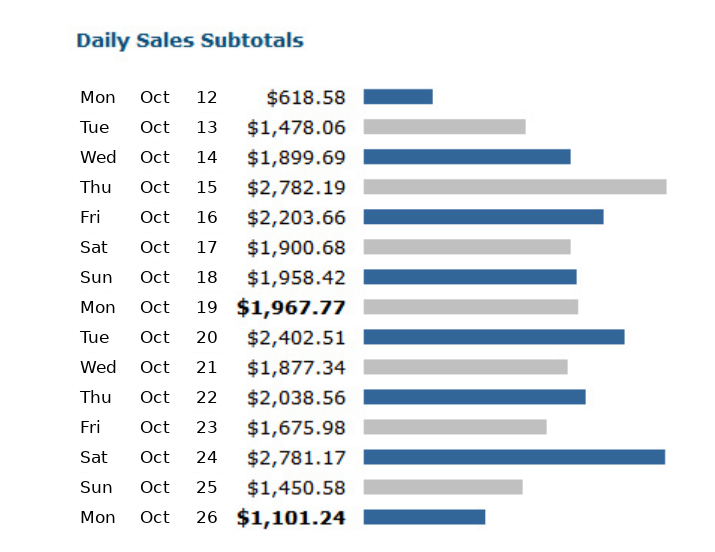
Real income proof from people who built side income with a minimum viable setup — individual results vary by effort, consistency, and market conditions.
The Math of Realistic Side Income
Here is what sustainable side income actually looks like when the design is right. These are honest ranges, and the early months are deliberately modest.
| Period | Monthly Income | What Is Actually Happening |
|---|---|---|
| Month 1 | $0–$100 | Building the habit, first outputs, no results yet |
| Month 2 | $0–$250 | Habit stable, first small signals |
| Month 3 | $50–$500 | First genuine result, feedback loop working |
| Month 4–6 | $150–$1,200 | Compounding begins, second stream possible |
| Month 7–12 | $300–$2,500 | Asset building, recurring income starting |
| Year 2 | $500–$4,000 | Sustainable side income range |
Read the first three rows. That is the honest picture — and it is the reason most attempts end. Nothing visible happens for roughly 90 days. The person is not failing. They are inside the period where the work exists but the result has not arrived yet.
Read the last row. That is what "actually making money on the side" looks like for someone who survives the first quarter: $500–$4,000 per month, built over a year, on 30–45 minutes per day.
The Lower Target, Longer Duration Adjustment
Almost every abandoned side hustle was designed with a target that was too high and a duration that was too short. The adjustment that fixes it is counterintuitive: lower the target and extend the timeline.
| Design | Target | Duration | Survival Rate |
|---|---|---|---|
| Ambitious | $2,000/month | 90 days | Very low |
| Realistic | $300/month | 6 months | Moderate |
| Sustainable | $100/month first, then grow | 12 months | High |
Read the bottom row. A $100-per-month target feels unambitious — and it is the one most likely to survive, because it is reachable and therefore produces the feedback that keeps the habit alive. The growth happens after survival, not instead of it.
The 90-Day Sustain Test
Before starting a side hustle, run this test. If it fails two or more questions, the design will not survive.
| Question | Pass | Fail |
|---|---|---|
| Can I do the daily action in under 30 minutes? | Yes | No — needs an hour |
| Does it cost under $20 to start? | Yes | No — needs capital |
| Is there one written next action? | Yes | Requires remembering |
| Will something measurable happen weekly? | Yes | No visible signal for weeks |
| Does the unit value mean few transactions reach $100? | Yes | Requires hundreds of sales |
| Can it survive a week of interruption? | Yes | Falls apart if skipped |
Read the last row. That is the one that predicts outcome more than any other. Life will interrupt. A design that cannot absorb a week of interruption is a design that will end at the first interruption.
The Four-Week Setup
Here is the practical sequence for starting without repeating the last attempt.
Week 1 — Pick one program and one daily action. Not three programs. Not a plan for the next six months. One program, one action, under 30 minutes.
Week 2 — Build the re-entry system. A single document with the next action written at the top. Every time you finish something, write the next action before stopping. That document is what makes interruption survivable.
Week 3 — Start the feedback log. A simple spreadsheet with three columns: date, action taken, result. Review it every Sunday. This is what replaces motivation with evidence.
Week 4 — Review and lower the target. Look at the log and set a target for the next month that is genuinely achievable. Lower than feels ambitious. The point is survival, not speed.
The 3 Programs That Fit an MVSH
Here are the three programs that work best within a minimum viable design, with each structure described honestly.
1. GreatLife Worldwide — Smallest Entry, Fastest First Signal
GreatLife Worldwide is the best fit for someone who needs a visible result early, because the entry is $14.95 and the first referral returns more than that.
- $20 fast-start commission per referred affiliate member
- 50% matching bonus on qualifying matrix commissions
- Product commissions on qualifying orders
- Matrix commissions across multiple levels
- Diamond revenue pool and International Diamond pool (subject to qualification)
- Leadership bonuses and retail sales commissions
- Payouts advertised up to three times per week
The fastest payout schedule matters for the sustain test — a visible payment in week two is the strongest possible feedback loop. Disclosure: the structure includes a matrix plan with matching bonuses, which places it closer to hybrid network marketing than pure single-tier affiliate marketing. That should be understood before joining.
Join GreatLife Worldwide and start earning $20 fast-start commissions today
2. ListElevate — Highest Unit Value Per Action
ListElevate fits the MVSH design because a single referral can produce a meaningful commission — which means the daily action does not have to be repeated hundreds of times to produce income.
- 200% commissions on every direct referral
- 25% residual commissions for life on everything your referrals buy
- 25% matching check on your referrals' income — if a referral earns $10,000, you receive $2,500
- No cap on referrals or income
- Email marketing software included — 99% inbox deliverability, 600,000 emails per hour
- $500 Email Marketing Mastery bonus included free
- 30-day money-back guarantee
The included email software is relevant to the sustain test — it removes the setup work that would otherwise consume the first weeks and delay any visible result.
Start building your list with ListElevate today — 200% commissions + $500 bonus
3. GotBackup — The Most Forgiving Design
GotBackup fits the MVSH design because recurring income means a missed week does not reset the total. The base keeps producing while the person is absent.
- 200% of the first month's subscription paid immediately
- 25% recurring on every month the customer stays active
- Team component — earn on your referrals' referrals
At roughly 200 active referrals, the recurring stream produces about $1,000 per month. That is the most interruption-tolerant design of the three — and interruption tolerance is what the sustain test is actually measuring.
Protect your data and earn recurring income with GotBackup
The 5 Mistakes That Repeat the Previous Attempt
- Starting a new method without diagnosing the old one. If the reason for stopping is not identified, the same pattern will repeat regardless of the method.
- Designing for peak energy. The plan should be something the tired version of you can do, not the motivated version.
- Setting a target that creates pressure instead of feedback. A target that is out of reach produces silence, which is what ends attempts.
- Having no written next action. Interruption is inevitable. Re-entry is optional — and depends entirely on whether the next step is written down.
- Quitting before the feedback loop exists. The first 90 days produce little. The log is what keeps the attempt alive through that period, not motivation.
Avoid all five and the next attempt has a genuinely different outcome from the last one — not because the method is better, but because the design survives real life.
Frequently Asked Questions
How can I actually make money on the side?
Stop trying to find a better method and fix the design instead. Most side attempts fail silently through five patterns: a target that was never a number, no feedback loop, the wrong unit value, no re-entry point, and a plan that required peak energy. Build a Minimum Viable Side Hustle — under 30 minutes a day, under $20 to start, one written next action, weekly measurable feedback, and a unit value high enough that a few transactions reach $100.
Why do most side hustles fail?
Most fail silently rather than dramatically. The person does not decide to quit; the activity tapers. One skipped day becomes two, two become a month, and by the time the person reflects on it, the attempt is over. That is why diagnosing the previous failure matters more than choosing a new method — the same drift pattern will repeat regardless of what the method is.
How much can I realistically make on the side?
Realistically $0–$250 per month for the first two months, $50–$500 by month three, and $300–$2,500 by month twelve on 30–45 minutes per day. Year two typically ranges from $500–$4,000 per month. The first 90 days produce little, which is why most attempts end before the results appear.
How much time do I need for a side hustle?
Less than most people think, if the design is right. 20–45 minutes per day attached to a slot that already exists — the commute, the lunch break, the quiet hour after the house goes to sleep — is enough. The mistake is designing for a new block of time in a schedule that had no room for one.
What is the minimum viable side hustle?
The smallest version of the work that still produces income and can run on a bad day. It has five criteria: under 30 minutes per day, under $20 to start, one written next action so re-entry takes seconds, something measurable every week, and a unit value high enough that a few transactions reach $100.
How do I keep going when nothing is happening?
Replace motivation with a feedback log. A simple spreadsheet with three columns — date, action taken, result — reviewed every Sunday. The log proves the work is happening even when results have not arrived, which is what the first 90 days require. Motivation fades; a log does not.
Which program is best for a side hustle that has to survive a busy life?
GotBackup is the most interruption-tolerant, because recurring income keeps arriving while the person is absent. GreatLife Worldwide produces the fastest first visible result, which strengthens the feedback loop early. ListElevate has the highest unit value per referral, which means fewer transactions are needed to reach a meaningful amount.
Conclusion — How Can I Actually Make Money on the Side?
So, how do you actually make money on the side? You stop looking for a better method and start diagnosing the last attempt. The word "actually" means something already failed — and almost every failure was silent, not dramatic. The activity tapered, nobody noticed, and the attempt ended without a decision.
The five silent failure modes are: a target that was never a number, no feedback loop, the wrong unit value, no re-entry point, and a design that required peak energy. Each one is fixable, and none of the fixes require more effort.
The solution is a Minimum Viable Side Hustle — under 30 minutes per day, under $20 to start, one written next action, weekly measurable feedback, and a unit value high enough that a few transactions reach $100. And the counterintuitive adjustment that makes it work: lower the target and extend the duration. A $100-per-month target over twelve months survives; a $2,000-per-month target over ninety days does not.
If affiliate income is the route, GreatLife Worldwide produces the fastest first signal ($20 per referral from a $14.95 entry, payouts up to three times per week), ListElevate has the highest unit value per action (200% commissions plus a 25% matching check and included email software), and GotBackup is the most interruption-tolerant (25% recurring income that keeps arriving while you are away).
Design for the bad day. Write down the next action. Log the work even when there is no result yet. And give it twelve months instead of ninety days — because the version of this that actually works is the one that is still running when nobody is watching.
Earnings Disclaimer
Results are not guaranteed. The income examples, timelines, and comparison figures shown in this article are illustrative estimates drawn from individual experiences and public program information — they are not promises of future earnings. Most people who start a side hustle do not reach the figures described, often because the attempt ends before results arrive. Your results will depend entirely on your own effort, available time, skills, circumstances, and the program you choose. No income claims are made or implied. Affiliate marketing requires real work, patience, and consistency — treat any program as a business, not a lottery ticket.
Affiliate Disclaimer
This article contains affiliate links. If you purchase a product through one of these links, the author may earn a commission at no additional cost to you. These commissions help support the creation of free content like this article. The presence of affiliate links does not influence the recommendations made here — the compensation structures of each program mentioned have been described as accurately as possible, including their matching, team, and matrix components, so readers can make an informed decision.
About Barry McKinney

Hi, my name is Barry. I have over 25 years of experience in affiliate marketing and a strong interest in network marketing and MLM. I quit my job 25 years ago and built a business that now generates a consistent five-figure monthly passive income – all from the comfort of my own home. I’m passionate about online business, financial freedom, and helping others discover the opportunities that network marketing can offer.