Leased Ad Space
How the Right Software Testing Strategies Transform Tech Companies
Published by Raja Ganapathi — 01-06-2026 02:01:21 AM
In a world where digital products shape customer experiences, software quality has become a business necessity rather than a technical option. Users expect applications to be reliable, fast, and secure from day one. Any failure no matter how small can lead to lost trust and revenue. To meet these demands, tech companies must follow structured Software Testing Course in Hyderabad strategies that ensure consistent quality across the development lifecycle.

1. Introduce Quality Early with Shift-Left Testing
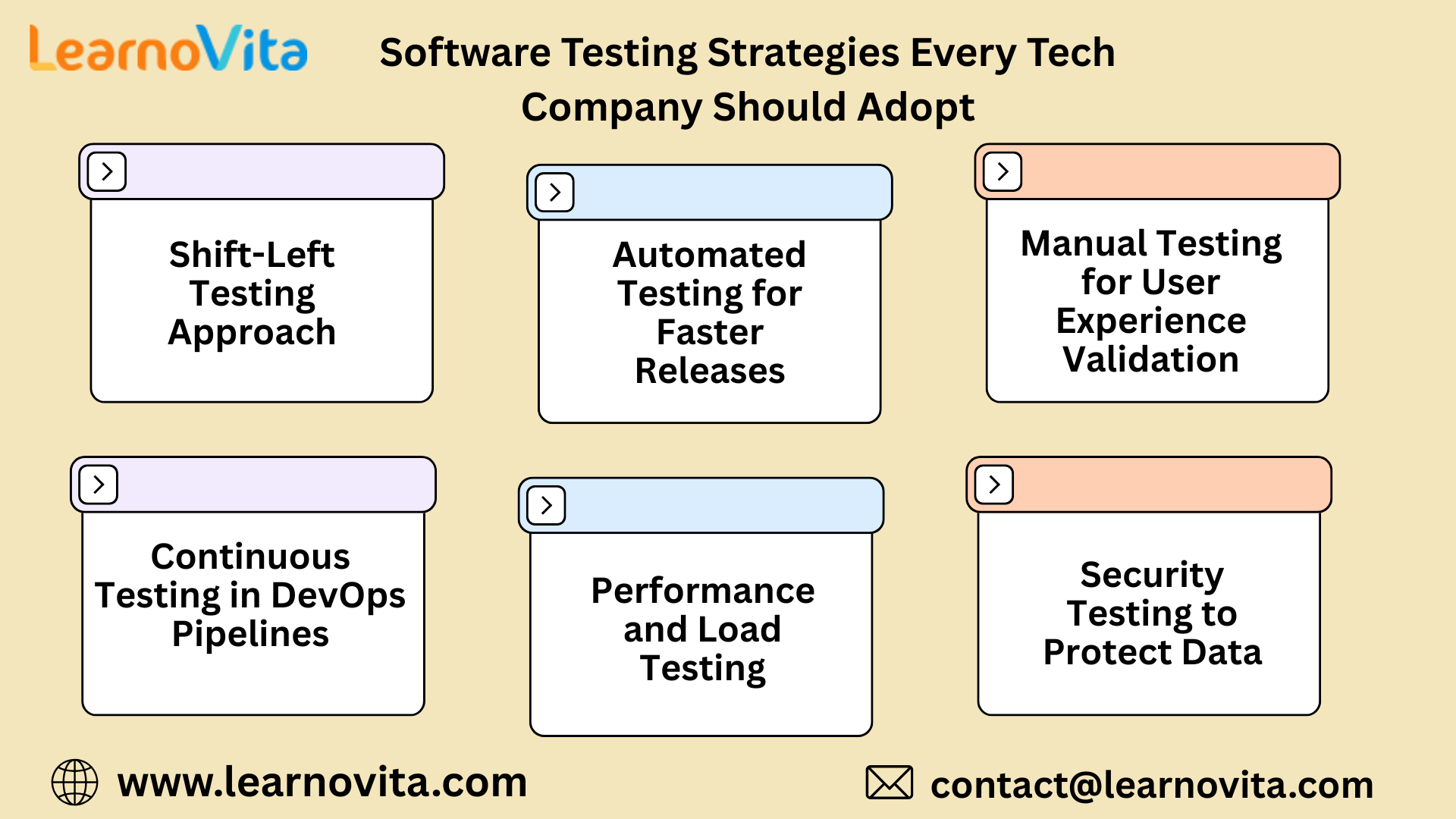
Shift-left testing focuses on moving testing activities to the earliest stages of development. Instead of waiting until coding is complete, teams validate requirements and designs upfront. This approach helps identify gaps early, reduces the cost of fixing defects later, and ensures the product aligns with business objectives from the start.
2. Accelerate Testing with Automation
Automation testing allows teams to run test cases quickly, repeatedly, and with greater accuracy. It is especially effective for regression testing, where existing functionality must be verified after every update. By reducing manual effort, automation supports agile and DevOps practices, enabling faster releases without compromising software quality.
3. Preserve Usability Through Manual Testing
While automation improves speed, manual testing remains essential for evaluating real user behavior. Manual testers can identify usability issues, workflow problems, and design inconsistencies that automated tests may miss. Exploratory testing further strengthens quality by allowing testers to interact freely with the application and uncover unexpected defects.
4. Embed Continuous Testing in CI/CD Pipelines
Continuous testing ensures that testing is integrated into the CI/CD pipeline. Automated tests run with every code change, providing immediate feedback to developers. This Software Training Institute strategy helps teams detect defects early, minimize deployment risks, and maintain stable software even with frequent updates.
5. Validate Performance Under Real Conditions
Performance testing evaluates how applications behave under different workloads. Load testing checks system behavior under expected usage, while stress testing measures performance during peak demand. These tests help identify bottlenecks, improve scalability, and ensure applications remain responsive during high traffic.
6. Strengthen Protection with Security Testing
Security testing focuses on identifying vulnerabilities that could expose applications to cyber threats. Regular security assessments help prevent data breaches, protect sensitive information, and ensure compliance with industry standards. Strong security practices also build long-term trust with users.
Conclusion
Effective software testing strategies are essential for delivering reliable, secure, and high-performing applications. By combining early testing, automation, manual validation, continuous testing, and thorough performance and security checks, tech companies can significantly reduce risks and improve delivery speed. A well-executed testing approach not only improves product quality but also supports customer satisfaction and sustainable business growth.
About Raja Ganapathi

This member hasn't told us anything about themselves yet! Encourage them to do so!