Leased Ad Space
Building a Data Science Career: A Structured Step-by-Step Guide
Published by Raja Ganapathi — 01-06-2026 07:01:29 AM
Data science is one of the most in-demand and exciting careers today. From uncovering hidden insights to predicting trends, data scientists play a crucial role in helping businesses make smarter, data-driven decisions. If you’re starting your journey in this field, Data Science Course in Hyderabad a clear roadmap can help you focus on what matters most and avoid getting overwhelmed.
Step 1: Master Math and Statistics
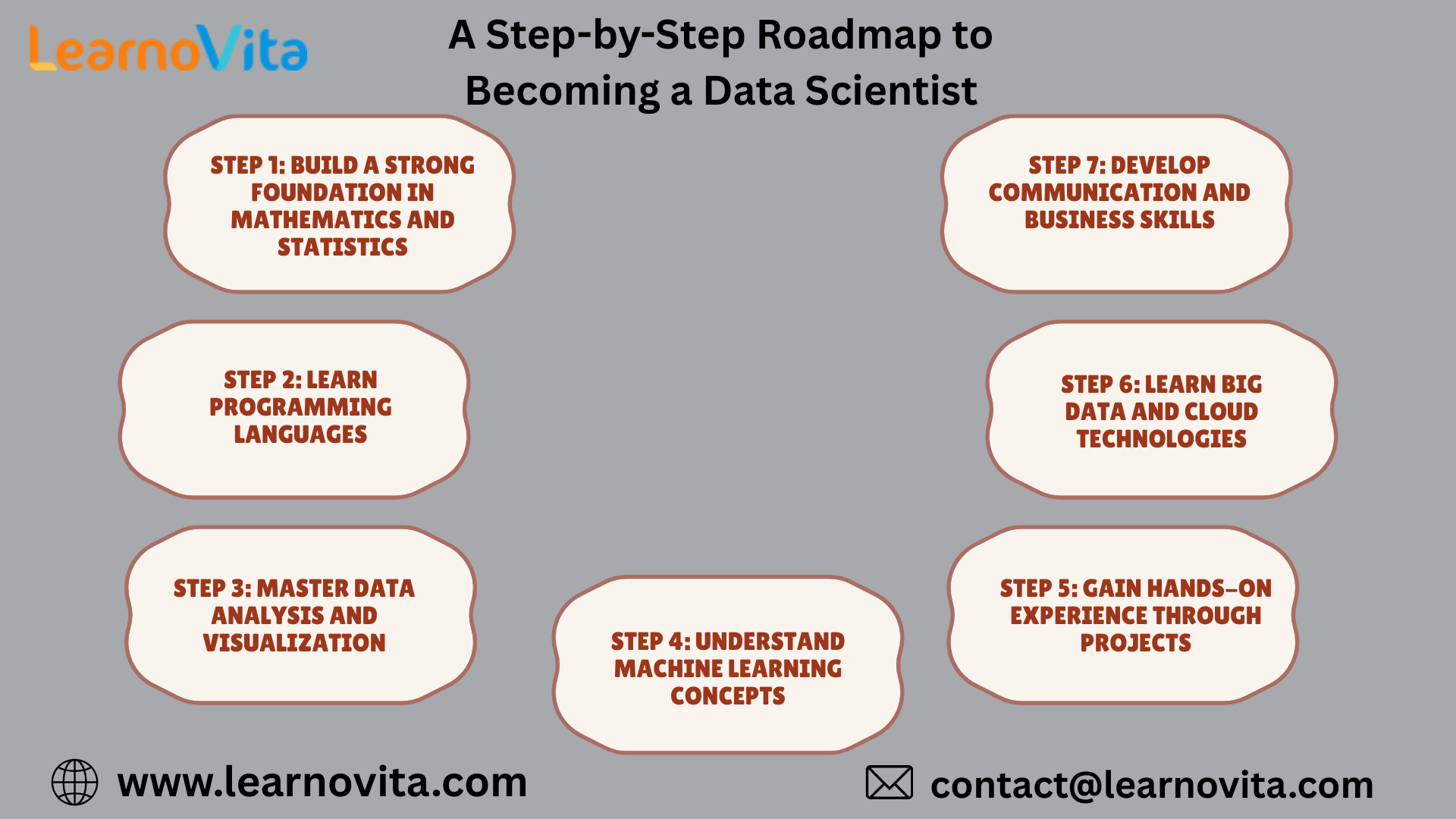
Mathematics and statistics form the foundation of data science. Understanding concepts like probability, linear algebra, descriptive statistics, and basic calculus is essential for analyzing data accurately. These skills help you make sense of patterns, validate models, and draw insights that are both reliable and actionable.
Step 2: Learn Programming
Programming is a must-have skill for every data scientist. Python and R are the most widely used languages, with Python favored for its simplicity and powerful libraries. SQL is equally important for querying and managing data in databases. Together, these skills allow you to manipulate data, perform analyses, and build models efficiently.
Step 3: Practice Data Cleaning and Visualization
Real-world data is rarely clean. Data cleaning—handling missing values, correcting inconsistencies, and organizing datasets—is a critical step before analysis. Once your data is ready, visualization tools like Tableau, Power BI, Matplotlib, or Seaborn help communicate insights clearly. Visualizations make your findings easy to understand, even for non-technical stakeholders.
Step 4: Learn Machine Learning
Machine learning is the engine that drives predictive and intelligent systems in data science. Beginners should start with supervised and unsupervised learning, model evaluation, and popular algorithms like regression, classification, and clustering. These skills allow you to create models that uncover insights and solve real-world problems.
Step 5: Gain Hands-On Experience
Practical experience is key to becoming a competent data scientist. Working on real datasets, personal projects, or online competitions helps you apply your knowledge and build confidence. A well-curated Software Training Institute project portfolio not only demonstrates your abilities but also sets you apart in a competitive job market.
Step 6: Explore Big Data and Cloud Tools
As datasets grow larger, familiarity with big data tools like Apache Spark and Hadoop becomes increasingly important. Cloud platforms such as AWS, Google Cloud, and Microsoft Azure provide scalable environments for storing, processing, and analyzing data. Knowledge of these technologies prepares you for the demands of modern data science roles.
Step 7: Develop Communication and Business Skills
Data science isn’t just about technical skills—it’s about insights that drive action. Being able to communicate your findings clearly and understand business objectives ensures your work delivers value. Storytelling with data is what turns analysis into real-world impact.
Conclusion
Becoming a data scientist is a journey that combines learning, practice, and continuous growth. By following this step-by-step roadmap, you can develop the technical knowledge, hands-on experience, and communication skills needed to succeed. With curiosity, dedication, and persistence, a rewarding career in data science is entirely within your reach.
About Raja Ganapathi

This member hasn't told us anything about themselves yet! Encourage them to do so!